
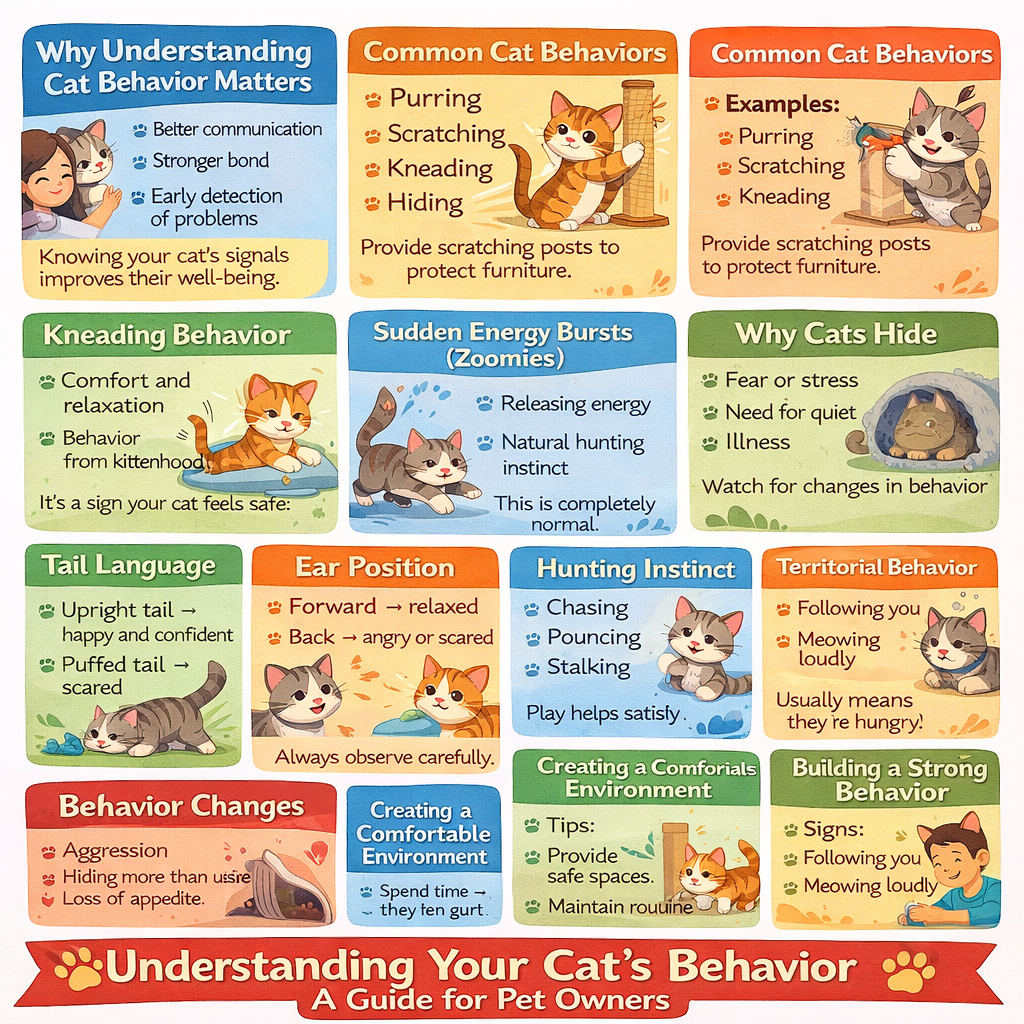
Cats are mysterious and fascinating creatures. Their behavior can sometimes seem confusing, especially for new pet owners. From sudden bursts of energy to quiet hiding, cats express themselves in unique ways.
Understanding your cat’s behavior helps you build a stronger bond and provide better care.
🐾 Why Understanding Cat Behavior Matters
Cats communicate differently than dogs.
Key Benefits:
- Better communication
- Stronger bond
- Early detection of problems
Knowing your cat’s signals improves their well-being.
😺 Common Cat Behaviors
Cats display a variety of behaviors.
Examples:
- Purring
- Scratching
- Kneading
- Hiding
Each behavior has a meaning.
🐱 Why Cats Scratch
Scratching is natural for cats.
Reasons:
- Sharpening claws
- Marking territory
- Stretching muscles
Provide scratching posts to protect furniture.
🐾 Kneading Behavior
Cats often knead with their paws.
Meaning:
- Comfort and relaxation
- Behavior from kittenhood
It’s a sign your cat feels safe.
🏃 Sudden Energy Bursts (Zoomies)
Cats sometimes run around suddenly.
Why:
- Releasing energy
- Natural hunting instinct
This is completely normal.
🐱 Why Cats Hide
Hiding can have different meanings.
Reasons:
- Fear or stress
- Need for quiet
- Illness
Watch for changes in behavior.
🐾 Tail Language
A cat’s tail reveals a lot.
Examples:
- Upright tail → happy and confident
- Puffed tail → scared
- Flicking tail → annoyed
Body language is key.
👂 Ear Position
Ears also communicate mood.
Signs:
- Forward → relaxed
- Back → angry or scared
Always observe carefully.
🧠 Hunting Instinct
Cats are natural hunters.
Behaviors:
- Chasing
- Pouncing
- Stalking
Play helps satisfy this instinct.
🐱 Meowing and Sounds
Cats use different sounds to communicate.
Types:
- Meowing → communication with humans
- Hissing → warning
- Purring → comfort
Each sound has meaning.
🍖 Food-Related Behavior
Cats may act differently around food.
Signs:
- Following you
- Meowing loudly
Usually means they’re hungry.
🐾 Territorial Behavior
Cats are territorial animals.
Signs:
- Rubbing on objects
- Scratching
They mark their space.
⚠️ Behavior Changes
Sudden changes may signal problems.
Watch For:
- Aggression
- Hiding more than usual
- Loss of appetite
Consult a vet if needed.
🏡 Creating a Comfortable Environment
A happy cat behaves better.
Tips:
- Provide safe spaces
- Maintain routine
Comfort reduces stress.
❤️ Building a Strong Bond
Understanding leads to trust.
Tips:
- Spend time together
- Respect boundaries
- Play regularly
A strong bond improves behavior.
🔮 Long-Term Behavior Understanding
Every cat is unique.
Focus On:
- Observing patterns
- Learning preferences
You’ll understand your cat better over time.
📌 Conclusion
Understanding your cat’s behavior is essential for providing proper care and building a strong relationship. By paying attention to their actions, body language, and habits, you can better meet their needs and ensure a happy life.
A well-understood cat is a happy cat.
