
Setting up a fish tank correctly is the most important step in keeping your fish healthy and happy. Many beginners rush this process, which often leads to problems like fish death, dirty water, and stress.
A proper aquarium setup creates a stable environment that mimics nature, making it easier for your fish to thrive.
In this guide, you’ll learn step-by-step how to set up your aquarium the right way.
🐾 Why Proper Tank Setup Matters
Your fish depend entirely on their environment.
Benefits of a Good Setup:
- Stable water conditions
- Less stress for fish
- Fewer diseases
- Easier maintenance
A well-set tank prevents most common problems.
🏡 Step 1: Choose the Right Tank Size
Tank size is one of the biggest factors in fish care.
Recommended for Beginners:
- Minimum 10–20 gallons
Why Bigger Is Better:
- More stable water
- Easier to maintain
- More space for fish
Small tanks are actually harder to manage.
📍 Step 2: Choose the Right Location
Where you place your tank is very important.
Ideal Location:
- Away from direct sunlight
- Quiet area
- Stable surface
Avoid:
- Windows (causes algae growth)
- Noisy places
🧼 Step 3: Clean the Tank Before Use
Never use soap or chemicals.
How to Clean:
- Rinse with clean water
- Use a soft cloth
Chemicals can harm fish.
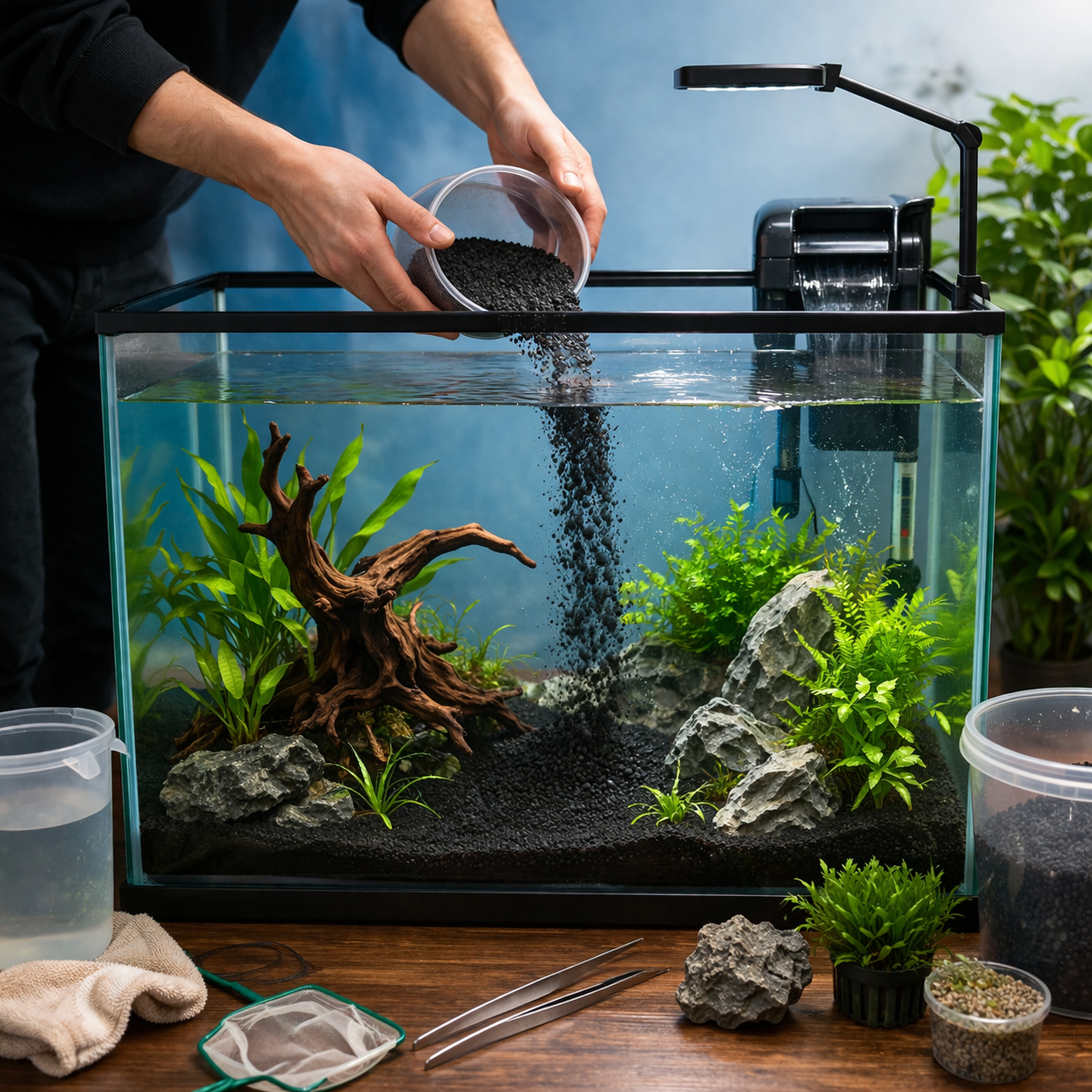
🪨 Step 4: Add Substrate (Gravel or Sand)
Substrate is the base layer of your tank.
Types:
- Gravel (best for beginners)
- Sand (for specific fish)
Tips:
- Wash substrate before adding
- Add 2–3 inches layer
🌿 Step 5: Add Decorations and Plants
Decorations make your tank natural and comfortable.
Include:
- Rocks
- Caves
- Plants (live or artificial)
Benefits:
- Hiding spots
- Reduced stress
💧 Step 6: Fill the Tank with Water
Fill the tank carefully.
Tips:
- Use room temperature water
- Pour slowly to avoid disturbing substrate
🧪 Step 7: Add Water Conditioner
Tap water contains chlorine, which is harmful.
Solution:
- Use a water conditioner
This makes water safe for fish.
🔄 Step 8: Install the Filter
A filter keeps your water clean.
Functions:
- Removes waste
- Supports beneficial bacteria
Always keep the filter running.
🌡️ Step 9: Install Heater and Thermometer
For tropical fish, temperature is crucial.
Ideal Temperature:
- 24–28°C
Use a heater to maintain stability.
💡 Step 10: Add Lighting
Lighting is important for both fish and plants.
Tips:
- 8–10 hours daily
- Avoid excessive light
Too much light causes algae.
🧠 Step 11: Start the Nitrogen Cycle
Before adding fish, your tank must cycle.
What Happens:
- Beneficial bacteria grow
- Toxic ammonia is converted
Time Needed:
- 1–2 weeks (or more)
Never skip this step.
🐟 Step 12: Add Fish Slowly
Do not add all fish at once.
Tips:
- Start with a few fish
- Wait before adding more
This keeps the system stable.
🧩 Step 13: Acclimate Fish Properly
Fish need time to adjust.
Steps:
- Float the bag in the tank
- Add tank water gradually
- Release fish gently
Prevents shock.
🧼 Step 14: Maintain the Tank
Setup is just the beginning.
Weekly Tasks:
- Water changes (20–30%)
- Clean glass
- Check equipment
Consistency is key.
⚠️ Common Tank Setup Mistakes
Avoid these mistakes:
- Adding fish too early
- Overcrowding
- Skipping water conditioner
- Turning off filter
These can harm your fish.
🐾 Choosing Compatible Fish
Not all fish can live together.
Tips:
- Research fish behavior
- Avoid aggressive combinations
Compatibility prevents fights.
❤️ Creating a Healthy Environment
Your goal is stability.
Focus On:
- Clean water
- Proper temperature
- Balanced fish population
A stable tank = healthy fish.
🔮 Long-Term Aquarium Success
A good setup leads to long-term success.
Remember:
- Be patient
- Monitor regularly
- Avoid sudden changes
Aquariums improve over time.
📌 Conclusion
Setting up your aquarium correctly is the foundation of successful fish keeping. By following the right steps—choosing the right tank, maintaining water quality, and being patient—you can create a beautiful and healthy environment for your fish.
A well-set aquarium is not just a tank—it’s a thriving ecosystem.
