
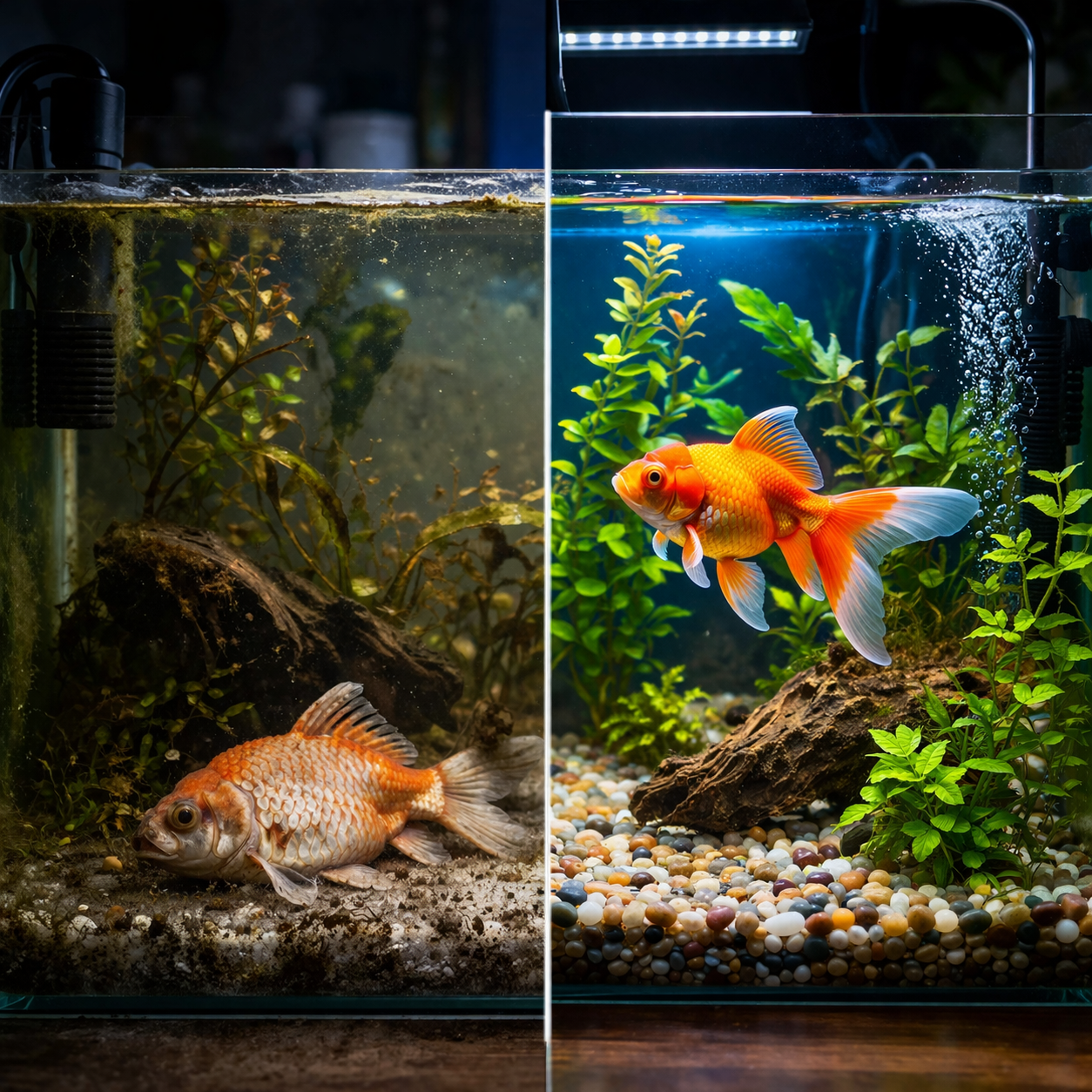
One of the most frustrating experiences for aquarium owners—especially beginners—is seeing their fish die suddenly without any clear reason. You may wake up one day and find a fish lifeless in the tank, even though everything seemed fine the day before.
The truth is, fish rarely die “suddenly.” There is almost always an underlying cause, and understanding these causes is the key to preventing future losses.
In this guide, we’ll explore the most common reasons fish die and how you can keep your aquarium healthy and safe.
🐾 Do Fish Really Die Suddenly?
In most cases, the answer is no.
Fish usually show subtle signs before dying, but beginners may not notice them.
Important:
- Fish are very sensitive to changes
- Small problems can quickly become fatal
⚠️ 1. Poor Water Quality (The #1 Cause)
This is the most common reason fish die.
Harmful Elements:
- Ammonia
- Nitrite
- High nitrate
Causes:
- Overfeeding
- Overcrowding
- Lack of cleaning
Signs:
- Fish gasping at the surface
- Lethargy
- Cloudy water
Solution:
- Test water regularly
- Perform weekly water changes
🧪 2. Tank Not Cycled Properly
Adding fish before completing the nitrogen cycle is a big mistake.
What Happens:
- Ammonia builds up quickly
- Fish get poisoned
Signs:
- Fish die within a few days
- Sudden deaths after setup
Solution:
- Cycle your tank before adding fish
- Use beneficial bacteria
🌡️ 3. Temperature Fluctuations
Fish are sensitive to temperature changes.
Causes:
- No heater
- Sudden weather changes
Effects:
- Stress
- Weak immune system
Solution:
- Use a heater
- Keep temperature stable
🐟 4. Overcrowding the Tank
Too many fish = big problems.
Issues:
- Less oxygen
- Faster waste buildup
- Stress
Result:
- Fish become weak and die
Solution:
- Follow stocking rules
- Avoid adding too many fish
🍎 5. Overfeeding
Feeding too much food harms both fish and water.
Problems:
- Uneaten food pollutes water
- Increased ammonia
Signs:
- Dirty tank
- Fish health decline
Solution:
- Feed small amounts
- Remove excess food
🦠 6. Fish Diseases
Diseases can spread quickly in aquariums.
Common Diseases:
- Ich (white spots)
- Fin rot
- Fungal infections
Signs:
- Spots on body
- Torn fins
- Unusual swimming
Solution:
- Quarantine new fish
- Treat early
🧠 7. Stress
Stress is a silent killer.
Causes:
- Sudden changes
- Aggressive tank mates
- Loud environment
Effects:
- Weak immune system
- Increased disease risk
Solution:
- Maintain stable conditions
- Choose compatible fish
🐾 8. Lack of Oxygen
Fish need oxygen to survive.
Causes:
- Poor filtration
- Overcrowding
- High temperature
Signs:
- Fish staying near surface
- Rapid breathing
Solution:
- Use air pump
- Improve water movement
🧩 9. Incompatible Fish
Some fish don’t get along.
Problems:
- Fighting
- Bullying
- Stress
Result:
- Injuries or death
Solution:
- Research fish compatibility
- Avoid aggressive mixes
☠️ 10. Toxic Substances
Fish are sensitive to chemicals.
Dangerous Sources:
- Soap residue
- Cleaning chemicals
- Tap water (chlorine)
Solution:
- Use water conditioner
- Never use chemicals in tank
🐟 11. Sudden Water Changes
Changing too much water can shock fish.
Mistake:
- Replacing all water at once
Effect:
- Stress and death
Solution:
- Change 20–30% weekly
🧠 12. Poor Acclimation
Adding fish too quickly causes shock.
Signs:
- Fish die within hours
Solution:
- Acclimate slowly
- Mix tank water gradually
⚠️ Warning Signs Before Fish Die
Watch for these signs:
- Not eating
- Hiding
- Slow movement
- Gasping
These indicate a problem.
❤️ How to Prevent Fish Death
Follow These Rules:
- Maintain clean water
- Avoid overfeeding
- Keep stable temperature
- Monitor fish daily
Prevention is always better than cure.
🏡 Creating a Healthy Aquarium
A stable tank means healthy fish.
Focus On:
- Filtration
- Water quality
- Proper feeding
🔮 Long-Term Fish Care Success
Consistency is key.
Remember:
- Small mistakes can have big effects
- Regular care keeps fish safe
📌 Conclusion
Fish rarely die without a reason. Most deaths are caused by preventable issues such as poor water quality, stress, or improper care. By understanding these causes and maintaining a stable environment, you can greatly reduce the risk of losing your fish.
A healthy aquarium is built on knowledge, patience, and consistency.
