
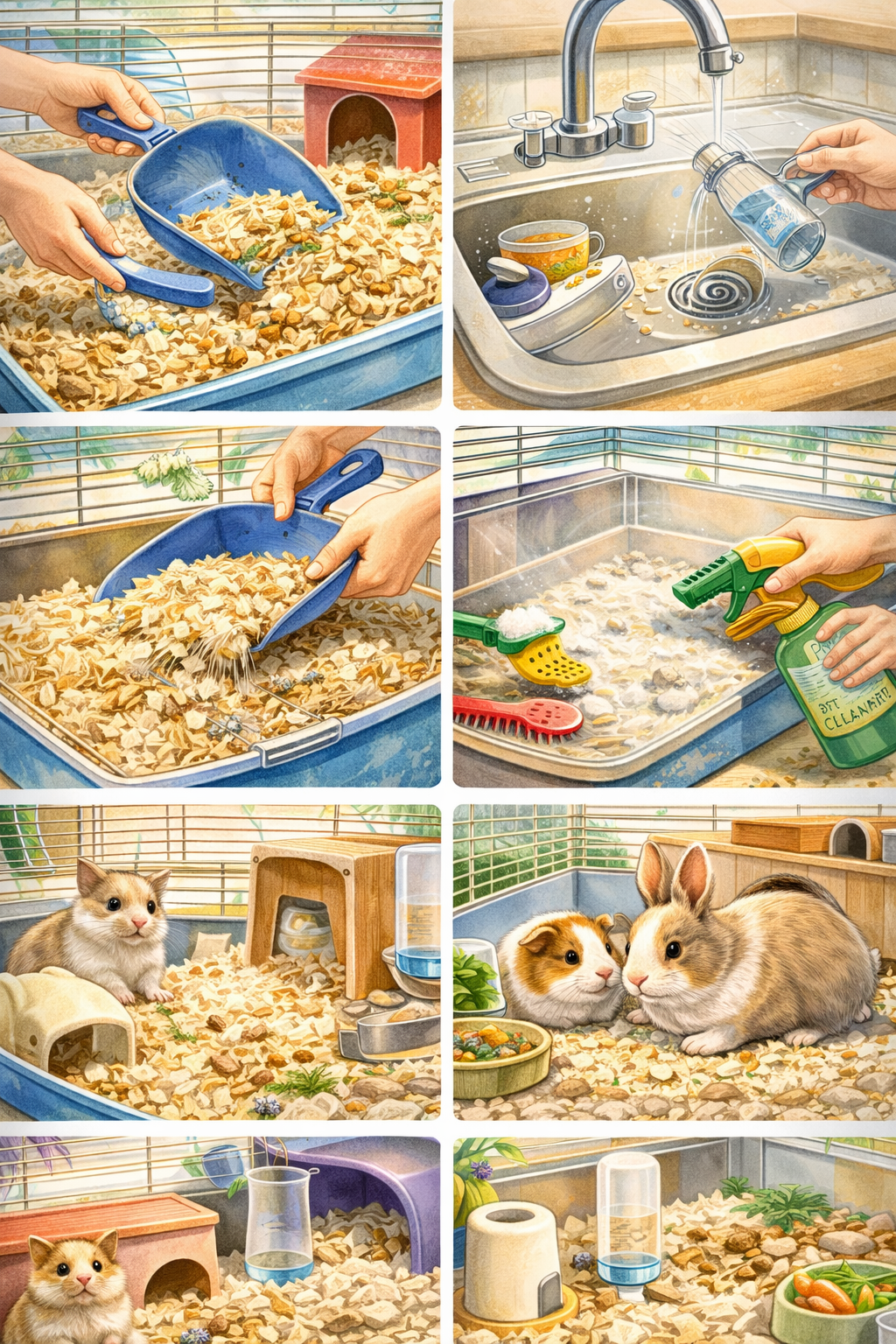
Keeping your small pet’s cage clean is essential for its health and comfort. A clean environment prevents diseases, reduces odors, and keeps your pet happy and active.
🧼 Why Cage Cleaning is Important
Regular cleaning helps:
- Prevent bacteria and infections
- Reduce bad smells
- Keep your pet comfortable
- Improve overall health
A dirty cage can quickly lead to serious health problems.
🕒 Cleaning Schedule
Having a routine makes things easier:
- Remove leftover food daily
- Spot clean dirty areas every day
- Do a full cage clean once a week
Consistency is key to maintaining hygiene.
🛏️ Changing Bedding
Bedding needs regular replacement:
- Remove old, dirty bedding
- Add fresh, clean bedding
- Use safe, absorbent materials
Clean bedding keeps your pet dry and comfortable.
🧽 Cleaning Accessories
Don’t forget items inside the cage:
- Wash food bowls and water bottles
- Clean toys and hideouts
- Remove any waste buildup
Dirty accessories can spread bacteria.
🚿 Deep Cleaning the Cage
Weekly deep cleaning is important:
- Take everything out of the cage
- Wash the cage with warm water
- Use pet-safe cleaning products
Avoid strong chemicals that can harm your pet.
🌬️ Drying Before Reuse
Always dry the cage properly:
- Make sure everything is completely dry
- Add fresh bedding only after drying
- Return clean accessories
Moisture can cause mold and bacteria growth.
⚠️ Avoid Over-Cleaning
Cleaning is important—but balance matters:
- Don’t clean everything too frequently
- Leave a small amount of old bedding sometimes
- This helps keep familiar smells for your pet
Too much cleaning can cause stress.
✅ Final Thoughts
A clean cage is the foundation of a healthy pet. With regular maintenance and proper cleaning habits, your small pet will live in a safe, fresh, and comfortable environment.
