
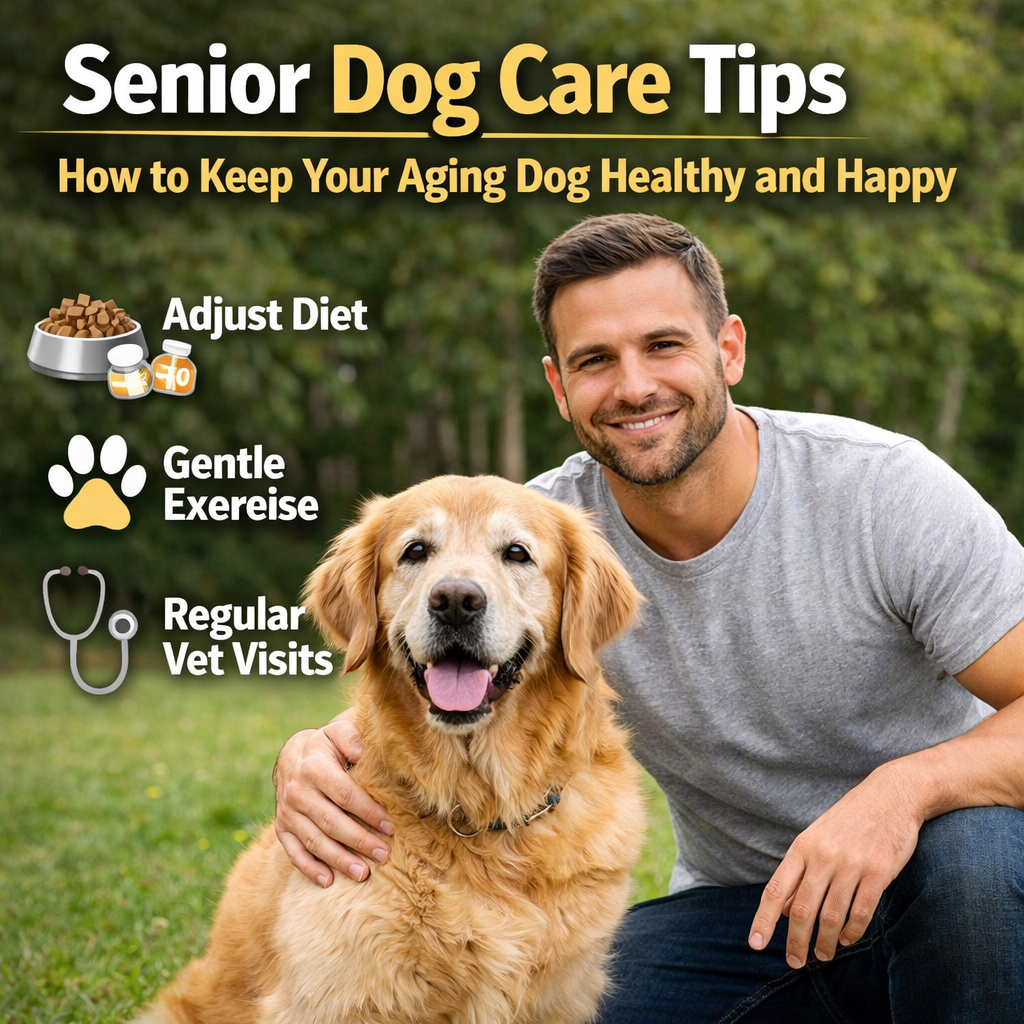
As dogs grow older, their needs begin to change. Senior dogs require extra care, attention, and adjustments to their lifestyle to maintain their health and comfort. Just like humans, aging dogs may experience slower movement, health issues, and changes in behavior.
Providing proper care during this stage can significantly improve your dog’s quality of life and help them stay happy for years to come.
🐾 When Is a Dog Considered Senior?
Dogs age differently depending on their size and breed.
General Guidelines:
- Small dogs → 10+ years
- Medium dogs → 8–10 years
- Large dogs → 6–8 years
Understanding your dog’s age helps you adjust care properly.
🧠 Common Changes in Senior Dogs
Aging brings noticeable changes.
Physical Changes:
- Reduced energy
- Slower movement
- Weight gain or loss
Behavioral Changes:
- More sleeping
- Less interest in play
- Possible confusion
These changes are normal but should be monitored.
🍖 Adjusting Your Dog’s Diet
Nutrition becomes more important with age.
Tips:
- Lower calorie intake
- High-quality protein
- Joint-support supplements
A proper diet supports overall health.
🚶 Exercise for Senior Dogs
Exercise is still important but should be gentle.
Recommended Activities:
- Short walks
- Light playtime
- Swimming
Avoid over-exertion.
🛏️ Comfortable Living Space
Older dogs need more comfort.
Tips:
- Soft bedding
- Warm environment
- Easy access to food and water
Comfort improves quality of life.
🏥 Regular Vet Check-Ups
Frequent check-ups are essential.
Why:
- Early detection of diseases
- Monitoring aging-related conditions
Visit the vet at least twice a year.
🦴 Joint and Mobility Care
Joint problems are common in senior dogs.
Solutions:
- Joint supplements
- Orthopedic beds
- Gentle exercise
Helps reduce pain and stiffness.
🦷 Dental Care
Dental health remains important.
Tips:
- Regular brushing
- Dental treats
- Vet check-ups
Prevents infections and discomfort.
👀 Monitoring Health Closely
Watch for warning signs.
Signs to Watch:
- Sudden weight changes
- Difficulty moving
- Loss of appetite
- Excessive thirst
Early action is important.
🧠 Mental Stimulation
Keep your dog’s mind active.
Ideas:
- Puzzle toys
- Simple training
- Interactive play
Mental health matters too.
💧 Hydration
Senior dogs need proper hydration.
Tips:
- Always provide fresh water
- Monitor drinking habits
Hydration supports organ function.
⚠️ Common Health Issues
Senior dogs may develop conditions such as:
- Arthritis
- Diabetes
- Heart disease
- Vision or hearing loss
Regular monitoring is key.
❤️ Emotional Support
Older dogs need more attention and love.
Tips:
- Spend quality time
- Be patient
- Maintain routine
Emotional care is just as important.
🏡 Adapting Your Home
Make your home senior-friendly.
Adjustments:
- Ramps instead of stairs
- Non-slip floors
- Easy access to resting areas
Helps prevent injuries.
🔮 Long-Term Care Strategy
Consistency is key.
Focus On:
- Routine care
- Healthy diet
- Regular vet visits
This ensures a better life for your dog.
📌 Conclusion
Caring for a senior dog requires patience, love, and attention to detail. By adjusting their diet, exercise, and environment, you can help your dog stay comfortable and healthy during their golden years.
Your aging dog still needs you—now more than ever.
