
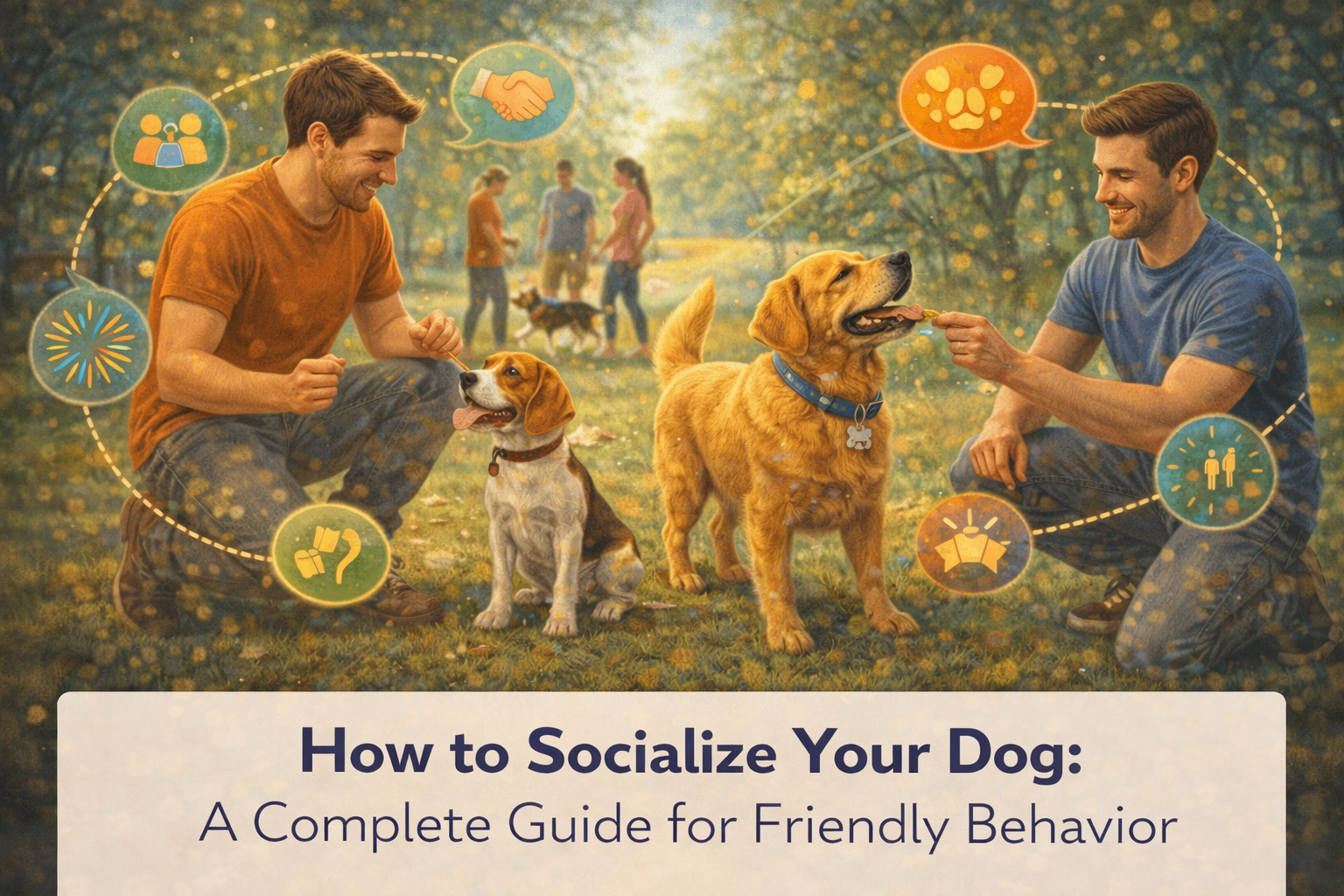
Socialization is one of the most important aspects of raising a well-behaved and confident dog. A properly socialized dog feels comfortable around people, other animals, and new environments. Without proper socialization, dogs may develop fear, anxiety, or even aggression.
The good news is that with the right approach, you can help your dog become friendly, calm, and confident in any situation.
🐾 What Is Dog Socialization?
Dog socialization means exposing your dog to different experiences in a positive way.
This Includes:
- Meeting new people
- Interacting with other dogs
- Exploring new environments
- Hearing different sounds
The goal is to make these experiences normal and non-threatening.
📅 When to Start Socializing Your Dog
The earlier you start, the better.
Best Time:
- Between 3 to 14 weeks (for puppies)
However, older dogs can still be socialized with patience.
🧠 Why Socialization Is Important
Proper socialization prevents behavior problems.
Key Benefits:
- Reduces fear and anxiety
- Prevents aggression
- Improves confidence
- Makes your dog easier to handle
A socialized dog is happier and safer.
🐶 Introducing Your Dog to New People
Start slowly and positively.
Tips:
- Let your dog approach first
- Use treats as rewards
- Keep interactions calm
Avoid forcing your dog into uncomfortable situations.
🐕 Socializing with Other Dogs
Interaction with other dogs is essential.
How to Do It:
- Start with calm, friendly dogs
- Use controlled environments
- Watch body language
Always supervise interactions.
🌳 Exploring New Environments
Expose your dog to different places.
Examples:
- Parks
- Streets
- Pet stores
This helps your dog adapt to new surroundings.
🔊 Getting Used to Sounds
Dogs can be sensitive to noise.
Common Sounds:
- Traffic
- Doorbells
- Fireworks
Gradually introduce sounds to reduce fear.
🧩 Positive Reinforcement
Reward your dog for calm behavior.
Rewards:
- Treats
- Praise
- Toys
Positive experiences build confidence.
⚠️ Avoid Overwhelming Your Dog
Too much too quickly can cause fear.
Signs of Stress:
- Trembling
- Hiding
- Growling
Take things slowly.
🐾 Socializing Adult Dogs
Older dogs can still learn.
Tips:
- Be patient
- Start with small steps
- Use consistent training
Progress may take longer, but it’s possible.
🐕🦺 Body Language Matters
Understanding your dog’s signals is important.
Signs of Comfort:
- Relaxed body
- Wagging tail
Signs of Stress:
- Ears back
- Avoiding eye contact
Always respect your dog’s feelings.
🏡 Socialization at Home
Training starts at home.
Ideas:
- Invite guests
- Introduce new objects
- Practice commands
Create a safe learning environment.
🚗 Traveling with Your Dog
Travel is a great way to socialize.
Benefits:
- New experiences
- Exposure to different environments
Start with short trips.
⚠️ Common Socialization Mistakes
Avoid these mistakes:
- Forcing interactions
- Ignoring fear signals
- Skipping early training
These can lead to long-term problems.
❤️ Building Confidence
Confidence grows over time.
Tips:
- Be patient
- Celebrate small wins
- Keep experiences positive
A confident dog is easier to manage.
🔮 Long-Term Social Behavior
Socialization is ongoing.
Continue With:
- Regular outings
- New experiences
- Interaction with others
This maintains good behavior.
📌 Conclusion
Socializing your dog is essential for raising a friendly, confident, and well-behaved companion. By introducing your dog to new experiences gradually and positively, you can prevent behavioral problems and build trust.
A well-socialized dog enjoys life more—and makes life easier for you too.
