
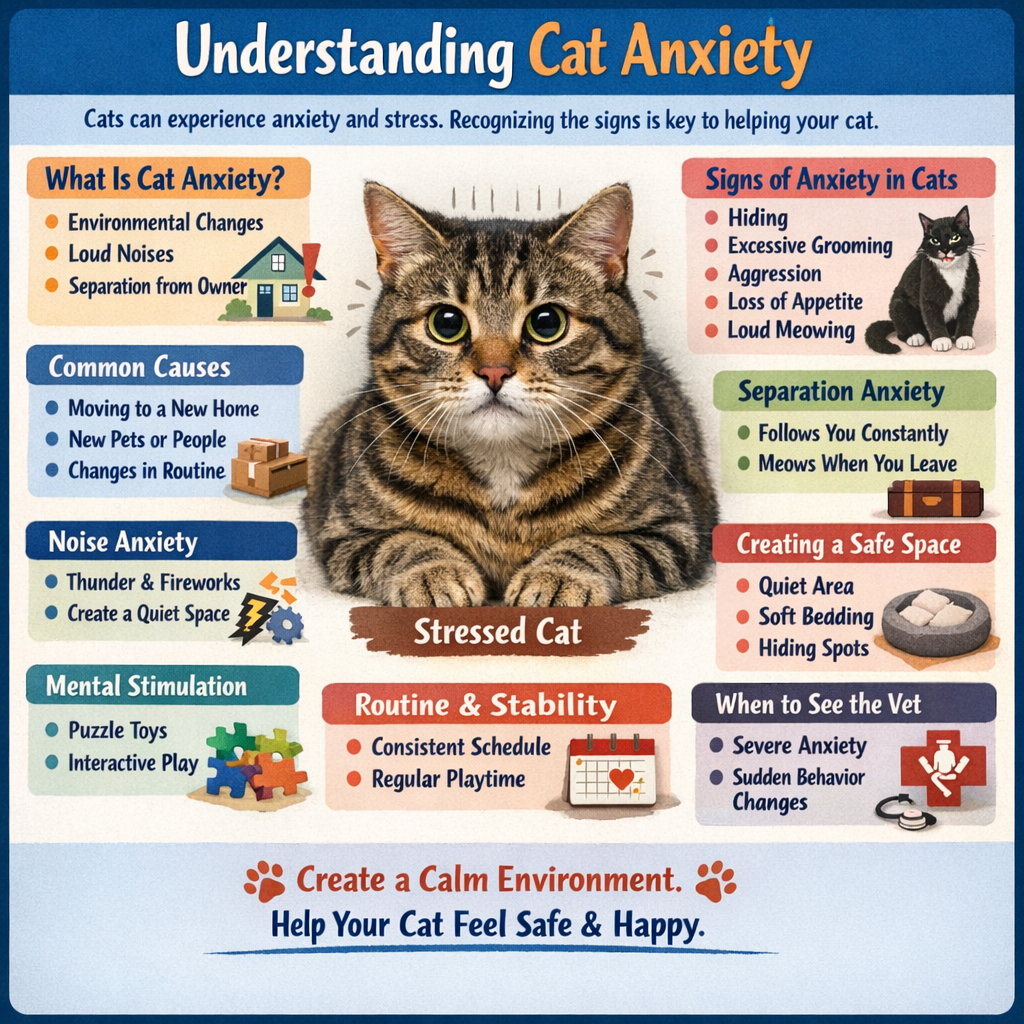
Just like humans, cats can experience anxiety and stress. While cats are known for being independent, they are actually very sensitive to changes in their environment. Anxiety can affect their behavior, health, and overall well-being.
Understanding the signs and causes of anxiety will help you keep your cat calm, comfortable, and happy.
🐾 What Is Cat Anxiety?
Cat anxiety is a state of stress or fear.
It Can Be Caused By:
- Environmental changes
- Loud noises
- Separation from owner
Recognizing it early is important.
⚠️ Signs of Anxiety in Cats
Cats often show subtle signs.
Common Signs:
- Hiding
- Excessive grooming
- Aggression
- Loss of appetite
- Loud meowing
These behaviors should not be ignored.
🧠 Common Causes of Anxiety
Understanding the cause helps solve the problem.
Causes:
- Moving to a new home
- New pets or people
- Changes in routine
- Loud sounds (fireworks, storms)
Cats prefer stability.
🐱 Separation Anxiety
Some cats get stressed when left alone.
Signs:
- Following you constantly
- Meowing when you leave
Solutions:
- Provide toys
- Leave comforting items
🔊 Noise Anxiety
Loud sounds can scare cats.
Examples:
- Thunder
- Fireworks
Solutions:
- Create a quiet space
- Use calming music
🏡 Creating a Safe Space
Cats need a place to feel secure.
Tips:
- Quiet area
- Soft bedding
- Hidden spots
This helps reduce stress.
🧩 Mental Stimulation
Keeping your cat busy helps reduce anxiety.
Ideas:
- Puzzle toys
- Interactive play
Mental activity calms cats.
🚶 Routine and Stability
Cats love routine.
Tips:
- Feed at the same time
- Play regularly
Consistency reduces anxiety.
🎯 Positive Reinforcement
Reward calm behavior.
Tips:
- Use treats
- Praise gently
Encourages relaxation.
⚠️ What NOT to Do
Avoid these mistakes:
- Punishing your cat
- Forcing interaction
- Ignoring stress signs
These make anxiety worse.
🐾 Gradual Exposure
Help your cat adjust slowly.
Example:
- Introduce new things step by step
This builds confidence.
🏥 When to Visit the Vet
Seek help if:
- Anxiety is severe
- Behavior changes suddenly
A vet can recommend treatment.
💊 Calming Products
Some products can help.
Examples:
- Calming sprays
- Pheromone diffusers
Always use vet-approved options.
❤️ Building Trust
Trust reduces anxiety.
Tips:
- Spend time together
- Stay calm
Your presence matters.
🔮 Long-Term Anxiety Management
Consistency is key.
Focus On:
- Routine
- Safe environment
- Positive experiences
Over time, anxiety improves.
📌 Conclusion
Cat anxiety is common but manageable with the right care and attention. By understanding the causes, recognizing the signs, and creating a calm environment, you can help your cat feel safe and relaxed.
A calm cat is a happy cat.
