
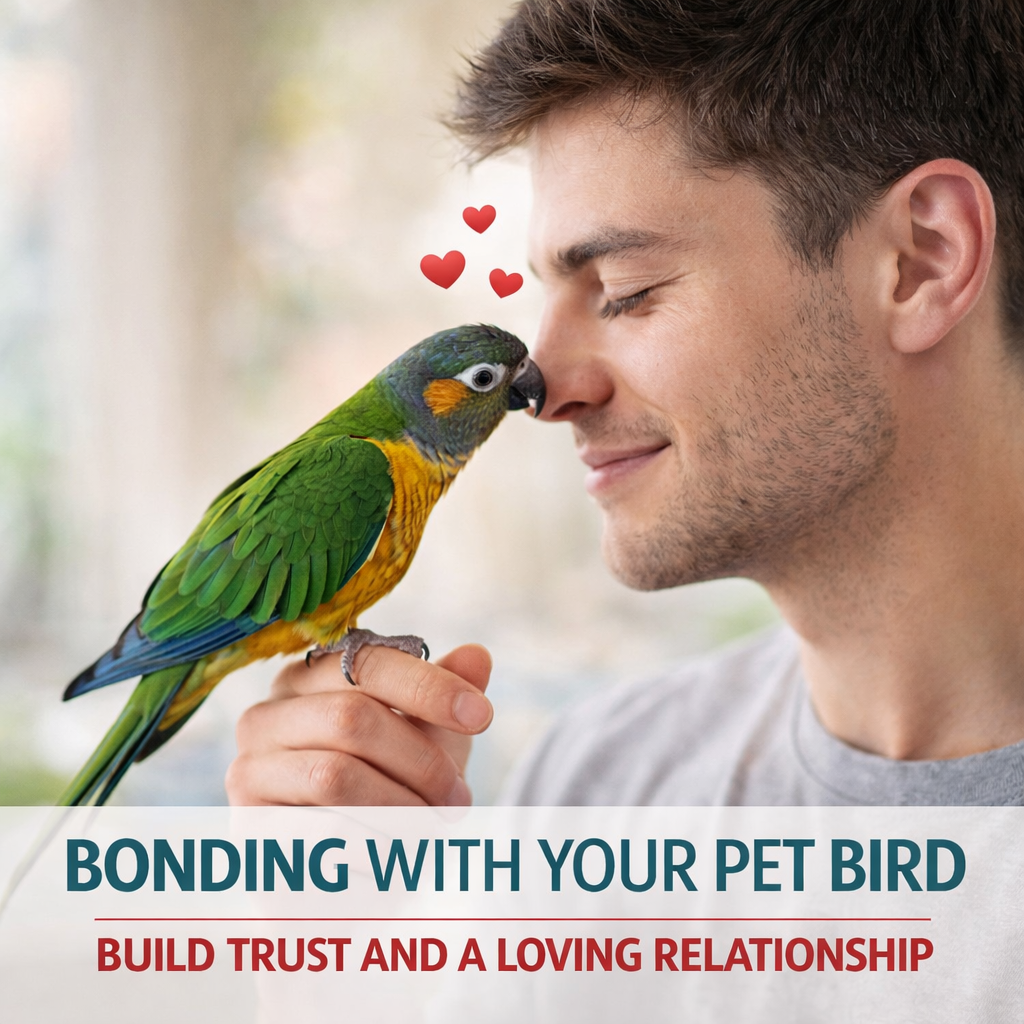
Building a strong bond with your pet bird is one of the most rewarding parts of bird ownership. Birds are intelligent, emotional, and social creatures, and they can form deep connections with their owners when treated with patience and care.
However, bonding with a bird takes time, consistency, and understanding. Unlike dogs or cats, birds may take longer to trust humans, especially if they are new or have had negative experiences.
🐾 Why Bonding Is Important
A strong bond improves your bird’s overall well-being.
Key Benefits:
- Reduces fear and stress
- Improves behavior
- Makes training easier
- Strengthens emotional connection
A bonded bird is more relaxed and happy.
🧠 Understanding Your Bird’s Personality
Every bird is unique.
Some Birds Are:
- Friendly and social
- Shy and cautious
- Curious and playful
Understanding your bird’s personality helps you approach bonding the right way.
🐦 Give Your Bird Time to Adjust
If your bird is new, don’t rush.
Tips:
- Allow time to explore the cage
- Avoid too much handling at first
Let your bird feel safe in its new environment.
🏡 Create a Safe Environment
Your bird needs to feel secure.
Tips:
- Keep the cage in a calm area
- Avoid loud noises
- Maintain a routine
A safe bird is more open to bonding.
🎤 Talk to Your Bird Daily
Birds respond well to your voice.
Tips:
- Speak softly
- Use the same tone
- Repeat your bird’s name
This helps your bird recognize and trust you.
🐾 Start with Hand Presence
Before touching your bird:
Do:
- Place your hand near the cage
- Let your bird observe you
This builds familiarity without pressure.
🧩 Use Treats to Build Trust
Food is a powerful tool.
Tips:
- Offer treats by hand
- Let your bird come to you
This creates positive association.
🐦 Teach the Step-Up Command
This is key for bonding.
Steps:
- Gently place your finger near your bird
- Say “Step up”
- Reward when successful
This builds trust and interaction.
⏰ Be Consistent
Bonding takes time.
Tips:
- Spend time daily
- Keep routines consistent
Consistency builds confidence.
⚠️ Avoid Forcing Interaction
Never force your bird to interact.
Avoid:
- Grabbing
- Sudden movements
This can break trust.
🧠 Learn Body Language
Understanding signals is important.
Positive Signs:
- Relaxed posture
- Chirping
- Curiosity
Negative Signs:
- Biting
- Hissing
- Fluffed feathers
Respect your bird’s boundaries.
🐾 Spend Quality Time Together
Interaction strengthens bonding.
Ideas:
- Play with toys
- Let your bird sit near you
Time together builds trust.
🧩 Mental Stimulation Helps Bonding
A stimulated bird is happier.
Provide:
- Toys
- Training sessions
Engagement improves your relationship.
❤️ Be Patient and Calm
Patience is the most important factor.
Remember:
- Every bird learns at its own pace
- Progress may be slow
Stay calm and positive.
🔮 Long-Term Bonding
Over time, your bird may:
- Sit on your shoulder
- Respond to your voice
- Show affection
Strong bonds develop gradually.
📌 Conclusion
Bonding with your pet bird takes time, patience, and consistency, but the results are incredibly rewarding. By creating a safe environment, respecting your bird’s boundaries, and spending quality time together, you can build a strong and lasting relationship.
A bonded bird is a loving and loyal companion.
