
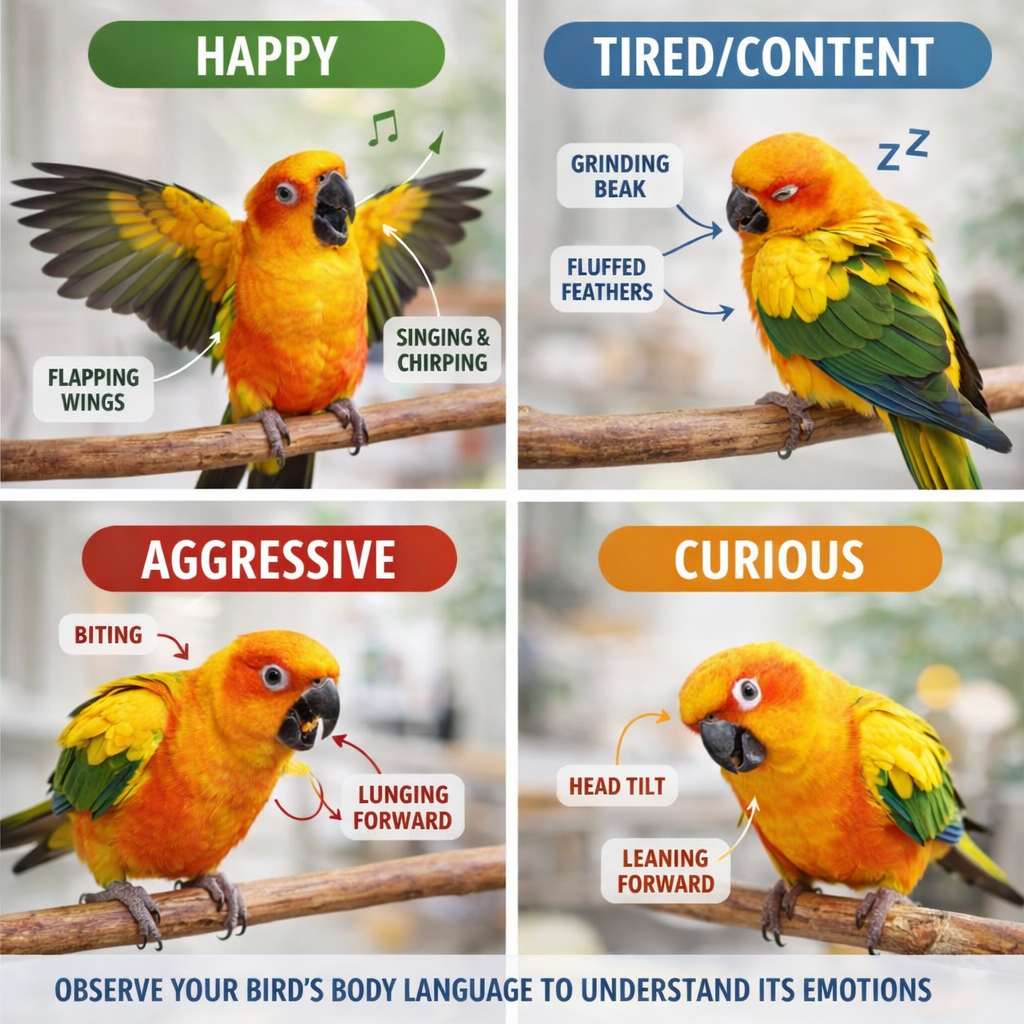
Birds are intelligent and expressive creatures, but their behavior can sometimes be confusing—especially for new owners. Understanding your bird’s behavior is essential for building a strong relationship, preventing problems, and ensuring your bird’s happiness.
Every sound, movement, and action your bird makes has meaning. Learning to read these signals will help you respond correctly and provide better care.
🐾 Why Understanding Bird Behavior Is Important
Bird behavior reflects both emotional and physical health.
Key Benefits:
- Better communication
- Stronger bond
- Early detection of stress or illness
A well-understood bird is a happy bird.
🐦 Common Bird Behaviors
Birds display many natural behaviors.
Examples:
- Chirping and singing
- Flapping wings
- Climbing
- Preening
Each behavior serves a purpose.
🎶 Singing and Chirping
This is one of the most common behaviors.
Meaning:
- Happiness
- Communication
- Attention-seeking
A vocal bird is usually a healthy bird.
🪶 Preening Behavior
Preening is natural grooming.
Purpose:
- Cleaning feathers
- Spreading natural oils
However, excessive preening may indicate stress.
🐾 Wing Flapping
Birds flap their wings for several reasons.
Reasons:
- Exercise
- Excitement
- Stretching
This is normal and healthy behavior.
🐦 Beak Grinding
A soft grinding sound from the beak is a good sign.
Meaning:
- Comfort
- Relaxation
- Readiness to sleep
This usually happens when your bird feels safe.
🧠 Aggressive Behavior
Sometimes birds may act aggressively.
Signs:
- Biting
- Lunging
- Screaming
Causes:
- Fear
- Stress
- Lack of trust
Understanding the cause is key to solving the issue.
🐾 Tail Movements
A bird’s tail can reveal its mood.
Examples:
- Wagging tail → excitement
- Rapid movement → stress or irritation
Body language matters.
⚠️ Signs of Stress in Birds
Birds can become stressed easily.
Warning Signs:
- Feather plucking
- Excessive screaming
- Loss of appetite
- Hiding or inactivity
Stress should be addressed immediately.
🐦 Biting Behavior
Biting is a common issue.
Reasons:
- Fear
- Protecting territory
- Lack of training
Solution:
- Stay calm
- Avoid punishment
- Build trust
🧩 Boredom and Lack of Stimulation
Birds need mental activity.
Signs of Boredom:
- Repetitive movements
- Loud screaming
- Destructive behavior
Solution:
- Provide toys
- Increase interaction
🏡 Environmental Impact on Behavior
Your bird’s surroundings affect behavior.
Factors:
- Cage size
- Noise level
- Lighting
A comfortable environment leads to better behavior.
🐾 Social Behavior
Birds are social animals.
They Need:
- Interaction
- Attention
- Communication
Lonely birds may develop behavioral issues.
❤️ Building Trust with Your Bird
Trust is the foundation of good behavior.
Tips:
- Be patient
- Use gentle movements
- Spend time daily
Trust reduces fear and aggression.
🧠 Understanding Individual Personality
Every bird is unique.
Some Birds Are:
- Playful
- Quiet
- Curious
- Independent
Learn your bird’s personality to meet its needs.
🔮 Long-Term Behavior Management
Consistency is key.
Focus On:
- Routine
- Positive reinforcement
- Stable environment
Good habits develop over time.
📌 Conclusion
Understanding your bird’s behavior is essential for providing proper care and building a strong, trusting relationship. By observing their actions and responding appropriately, you can ensure your bird feels safe, happy, and understood.
A well-understood bird is a calm and loving companion.
