
One of the most important steps in setting up an aquarium—and one of the most ignored by beginners—is tank cycling. Many people buy a tank, fill it with water, add fish immediately… and then wonder why their fish die within days.
The reason is simple: the tank was not cycled.
In this guide, you’ll learn what fish tank cycling is, why it matters, and how to do it properly.
🐾 What Is Fish Tank Cycling?
Tank cycling is the process of building beneficial bacteria in your aquarium.
These bacteria help:
- Break down fish waste
- Convert toxic chemicals into safer ones
Without this process, your tank becomes toxic.
🧠 Why Cycling Is Important
Fish produce waste, which turns into harmful substances.
The Problem:
- Waste → Ammonia (toxic)
The Solution:
Beneficial bacteria convert:
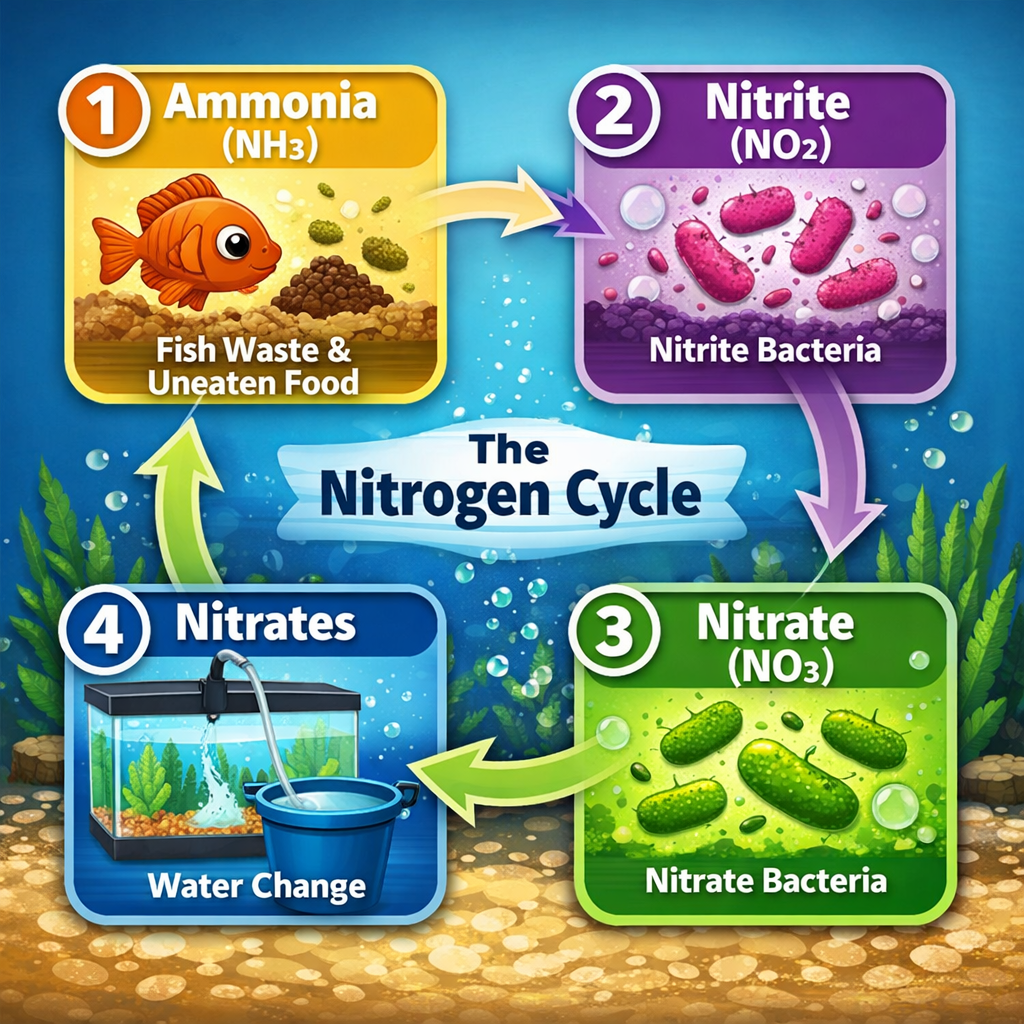
- Ammonia → Nitrite → Nitrate
👉 This is called the Nitrogen Cycle
⚠️ What Happens Without Cycling?
If you skip cycling:
- Ammonia builds up
- Fish get poisoned
- Fish may die quickly
👉 This is the #1 reason beginner fish die
🧪 The Nitrogen Cycle Explained
Step 1: Ammonia
Produced by:
- Fish waste
- Uneaten food
👉 Highly toxic
Step 2: Nitrite
Bacteria convert ammonia → nitrite
👉 Still toxic
Step 3: Nitrate
Another bacteria converts nitrite → nitrate
👉 Less harmful
Removed by water changes
🐠 Types of Tank Cycling
🥇 Fishless Cycling (Best Method)
No fish are added during cycling.
Advantages:
- Safe
- No fish stress
- Controlled process
🥈 Fish-In Cycling
Fish are present during cycling.
Problems:
- Stressful
- Risky
👉 Not recommended for beginners
🧠 How Long Does Cycling Take?
Usually:
👉 1–3 weeks
Sometimes longer depending on conditions.
🐾 Step-by-Step Fishless Cycling
🥇 Step 1: Set Up Your Tank
- Add water
- Install filter
- Turn on equipment
🥈 Step 2: Add Ammonia Source
You need ammonia to start the cycle.
Options:
- Fish food
- Pure ammonia
🥉 Step 3: Wait and Test Water
Use test kits to monitor:
- Ammonia
- Nitrite
- Nitrate
🐾 Step 4: Watch the Cycle Progress
- Ammonia rises → then drops
- Nitrite rises → then drops
- Nitrate increases
👉 This means cycling is working
🧩 Step 5: Final Water Change
Before adding fish:
- Change 50–70% of water
🐟 Step 6: Add Fish Slowly
Start with a few fish.
👉 Do NOT overload the tank
⚠️ Common Cycling Mistakes
Avoid these:
- Adding fish too early
- Not testing water
- Turning off filter
- Being impatient
🧠 Signs Your Tank Is Fully Cycled
Your tank is ready when:
- Ammonia = 0
- Nitrite = 0
- Nitrate is present
🐾 Using Bacteria Starters
You can speed up cycling.
Products:
- Beneficial bacteria supplements
👉 Helps but still needs time
🧼 Maintaining the Cycle
Even after cycling:
Keep:
- Filter running
- Regular water changes
🐠 Cycling and Fish Health
A cycled tank means:
- Healthy fish
- Less stress
- Longer lifespan
🧠 Why Patience Is Important
Cycling takes time.
👉 Rushing = dead fish
❤️ Creating a Stable Aquarium
Your goal is balance.
Focus On:
- Good bacteria
- Clean water
- Proper maintenance
🔮 Long-Term Aquarium Success
A properly cycled tank:
- Runs smoothly
- Needs less effort
📌 Conclusion
Cycling your aquarium is the foundation of fish keeping. It may take time, but it ensures a safe and healthy environment for your fish. By understanding the nitrogen cycle and following the correct steps, you can avoid common beginner mistakes and enjoy a thriving aquarium.
Patience during cycling leads to long-term success.
