
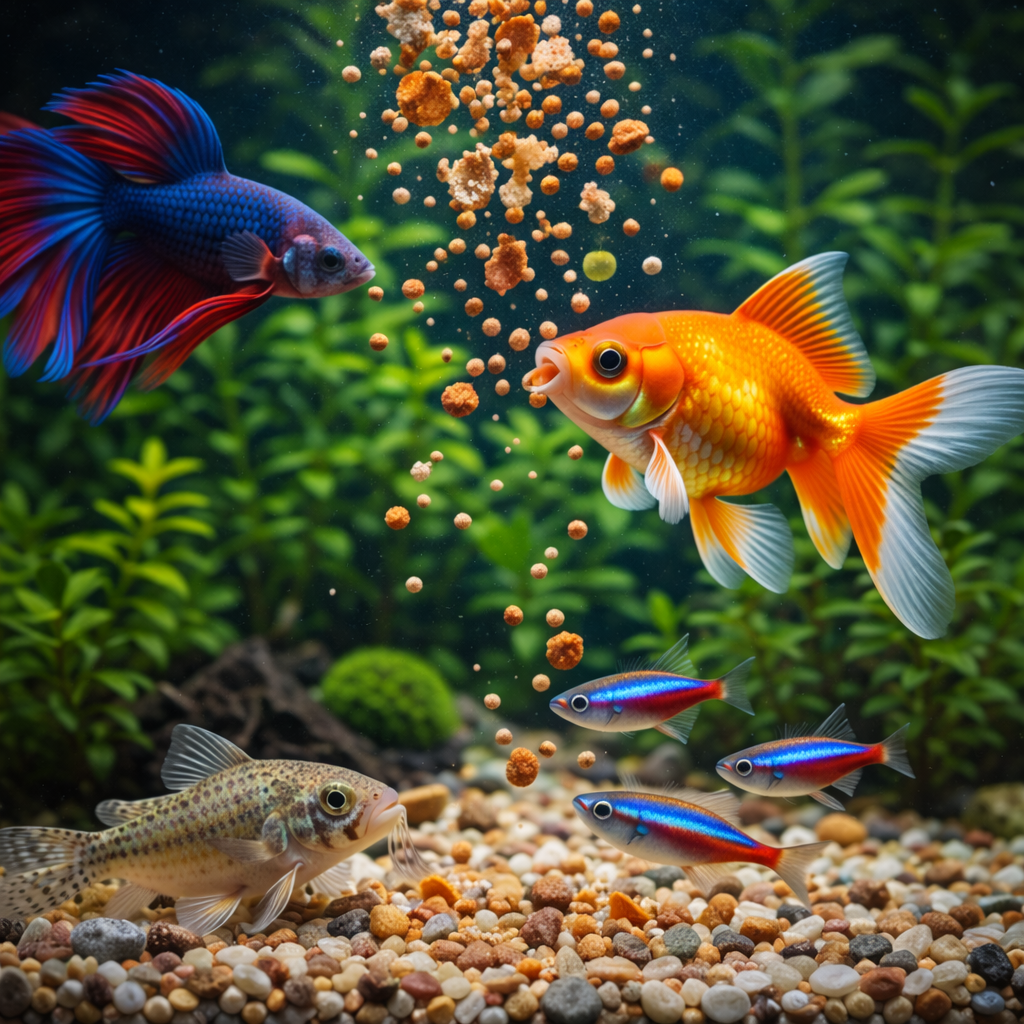
Feeding your fish might seem like the easiest part of fish care, but in reality, it is one of the most important—and most misunderstood—tasks. Many fish owners make simple feeding mistakes that can lead to serious problems like poor water quality, disease, and even fish death.
In this complete guide, you’ll learn how to feed your fish properly, what foods to use, and how to avoid common feeding mistakes.
🐾 Why Proper Feeding Is Important
Fish rely entirely on you for their nutrition.
Benefits of Proper Feeding:
- Healthy growth
- Bright colors
- Strong immune system
- Active behavior
Good nutrition keeps your fish thriving.
⚠️ The Biggest Mistake: Overfeeding
Overfeeding is the #1 feeding mistake.
Why It’s Dangerous:
- Uneaten food pollutes water
- Increases ammonia levels
- Causes diseases
Rule:
👉 Feed only what fish can eat in 2–3 minutes
🧠 How Often Should You Feed Fish?
Feeding frequency depends on the type of fish.
General Rule:
- 1–2 times per day
For Beginners:
- Once daily is usually enough
Fish do NOT need constant feeding.
🐟 Types of Fish Food
Different fish require different types of food.
🥇 1. Flake Food
Most common and beginner-friendly.
Pros:
- Easy to use
- Suitable for many fish
🥈 2. Pellets
Better for larger fish.
Benefits:
- Less mess
- More nutrition
🥉 3. Frozen Food
Examples:
- Bloodworms
- Brine shrimp
Benefits:
- High protein
- Natural diet
🐾 4. Live Food
Used for advanced care.
Examples:
- Worms
- Small insects
🌿 5. Vegetable-Based Food
Some fish need plants.
Examples:
- Algae wafers
- Blanched vegetables
🧩 Matching Food to Fish Type
Not all fish eat the same.
Types of Fish:
Carnivores:
- Eat protein (meat-based food)
Herbivores:
- Eat plants and algae
Omnivores:
- Eat both
Choose food based on your fish type.
🐠 How Much Should You Feed?
Portion control is key.
Simple Rule:
- Small amounts
- No leftovers
If food sinks uneaten → you gave too much.
🧠 Signs of Overfeeding
Watch for these signs:
- Cloudy water
- Food leftover
- Fish becoming lazy
- Algae growth
These indicate feeding problems.
🐾 Signs of Underfeeding
Too little food is also a problem.
Signs:
- Thin fish
- Weak activity
- Aggressive behavior
Balance is important.
⏰ Best Time to Feed Fish
Fish get used to routines.
Best Times:
- Morning
- Evening
Feed at the same time daily.
🧼 Feeding and Water Quality
Feeding directly affects water.
Overfeeding Leads To:
- Dirty tank
- High ammonia
Clean feeding = clean water.
🐟 Feeding Different Fish in One Tank
If you have multiple species:
Tips:
- Use different food types
- Feed in different areas
Ensure all fish get food.
⚠️ Common Feeding Mistakes
Avoid these:
- Feeding too much
- Feeding too often
- Using wrong food
- Ignoring fish type
These mistakes harm fish.
🧩 Special Feeding Tips
For Bottom Feeders:
- Use sinking food
For Surface Feeders:
- Use floating flakes
❤️ Building a Feeding Routine
Routine improves fish health.
Example:
- Feed once daily
- Observe fish
Consistency is key.
🏡 Keeping Feeding Simple
Don’t overcomplicate.
Focus On:
- Right food
- Right amount
- Clean tank
Simple care works best.
🔮 Long-Term Feeding Success
As you gain experience:
- Try different foods
- Improve diet variety
Healthy feeding = long life.
📌 Conclusion
Feeding your fish properly is essential for their health and the overall balance of your aquarium. By avoiding overfeeding, choosing the right food, and maintaining a routine, you can ensure your fish stay active, colorful, and healthy.
A well-fed fish is a happy fish.
