
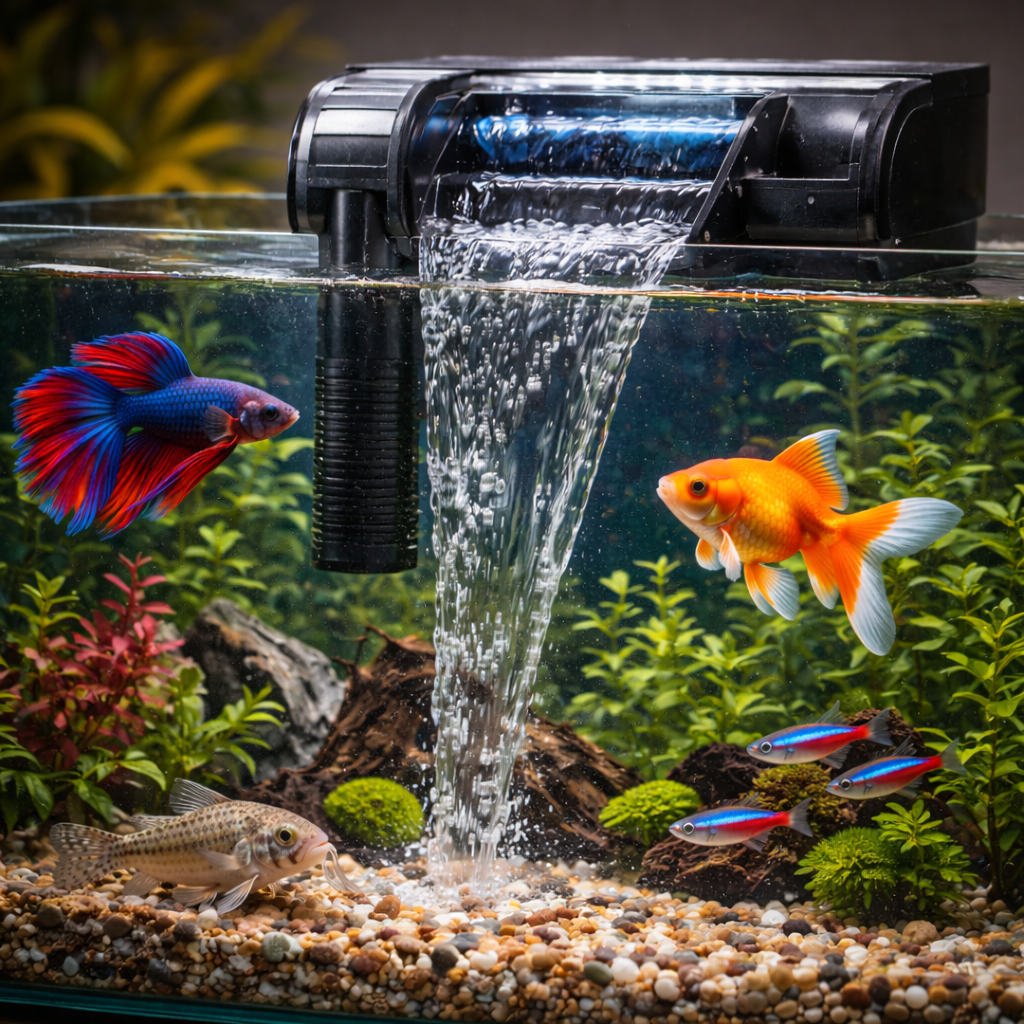
A fish tank filter is the heart of your aquarium. Without proper filtration, your tank can quickly become toxic, leading to unhealthy fish and poor water quality.
Many beginners underestimate the importance of filters or choose the wrong type, which causes problems later. In this guide, you’ll learn everything about aquarium filters—how they work, how to choose the right one, and how to maintain it properly.
🐾 Why a Filter Is Important
Fish produce waste constantly, and uneaten food also pollutes the water.
Without a Filter:
- Ammonia builds up
- Water becomes toxic
- Fish get sick or die
With a Filter:
- Water stays clean
- Toxins are reduced
- Fish stay healthy
🧠 How Aquarium Filters Work
Filters clean water in three main ways:
🧩 1. Mechanical Filtration
Removes visible waste.
Examples:
- Fish waste
- Uneaten food
- Dirt
This keeps water clear.
🧪 2. Biological Filtration (Most Important)
This supports beneficial bacteria.
What It Does:
- Converts ammonia → nitrite → nitrate
These bacteria are essential for fish survival.
⚗️ 3. Chemical Filtration
Removes harmful substances.
Examples:
- Carbon filters
- Removes toxins and odors
🐠 Types of Aquarium Filters
🥇 1. Sponge Filter
Great for beginners.
Pros:
- Cheap
- Easy to use
- Safe for small fish
Cons:
- Not very powerful
🥈 2. Hang-On-Back (HOB) Filter
Most popular type.
Pros:
- Easy to install
- Good filtration
- Affordable
Perfect for most aquariums.
🥉 3. Canister Filter
For advanced users.
Pros:
- Very powerful
- Suitable for large tanks
Cons:
- Expensive
- More complex
🐾 4. Internal Filter
Placed inside the tank.
Pros:
- Compact
- Easy setup
Cons:
- Takes space inside tank
🧠 Choosing the Right Filter
Selecting the right filter depends on your tank.
Consider:
1. Tank Size:
- Small tank → sponge or internal
- Medium tank → HOB
- Large tank → canister
2. Fish Type:
- Small fish → gentle flow
- Large fish → stronger filter
⚠️ Filter Size Rule
Always choose a filter slightly stronger than needed.
Example:
- 20-gallon tank → use filter for 30 gallons
Better filtration = healthier tank.
🔄 How Often Should You Clean Your Filter?
Filters need cleaning, but not too much.
General Rule:
- Clean every 2–4 weeks
🧼 How to Clean Your Filter Properly
⚠️ Important: Never use tap water!
Steps:
- Turn off filter
- Remove filter media
- Rinse using tank water
This protects beneficial bacteria.
🧠 Why You Should NOT Over-Clean
Cleaning too much removes good bacteria.
Result:
- Ammonia spike
- Fish stress or death
Balance is important.
🐟 Signs Your Filter Is Not Working
Watch for these signs:
- Cloudy water
- Bad smell
- Fish acting strange
- Reduced water flow
These mean your filter needs attention.
⚡ Common Filter Mistakes
Avoid these mistakes:
- Turning off filter at night
- Cleaning with tap water
- Using wrong filter size
- Ignoring maintenance
🌬️ Filter Flow and Fish Comfort
Strong flow can stress some fish.
Tips:
- Adjust flow speed
- Use sponge for soft flow
🧩 Do You Need an Air Pump?
Filters already add oxygen, but:
You may need an air pump if:
- Tank is overcrowded
- Oxygen levels are low
🏡 Creating a Balanced Filtration System
Good filtration keeps your tank stable.
Focus On:
- Proper filter size
- Regular maintenance
- Stable water flow
❤️ Long-Term Filter Care
Consistency is key.
Tips:
- Check filter weekly
- Replace parts when needed
- Monitor performance
🔮 Healthy Tank = Healthy Filter
Your filter supports the entire ecosystem.
Remember:
- Don’t turn it off
- Don’t over-clean
- Keep it running always
📌 Conclusion
A good filter is essential for maintaining a healthy aquarium. By choosing the right type, maintaining it properly, and understanding how it works, you can create a clean and safe environment for your fish.
A strong filter means a strong aquarium.
