
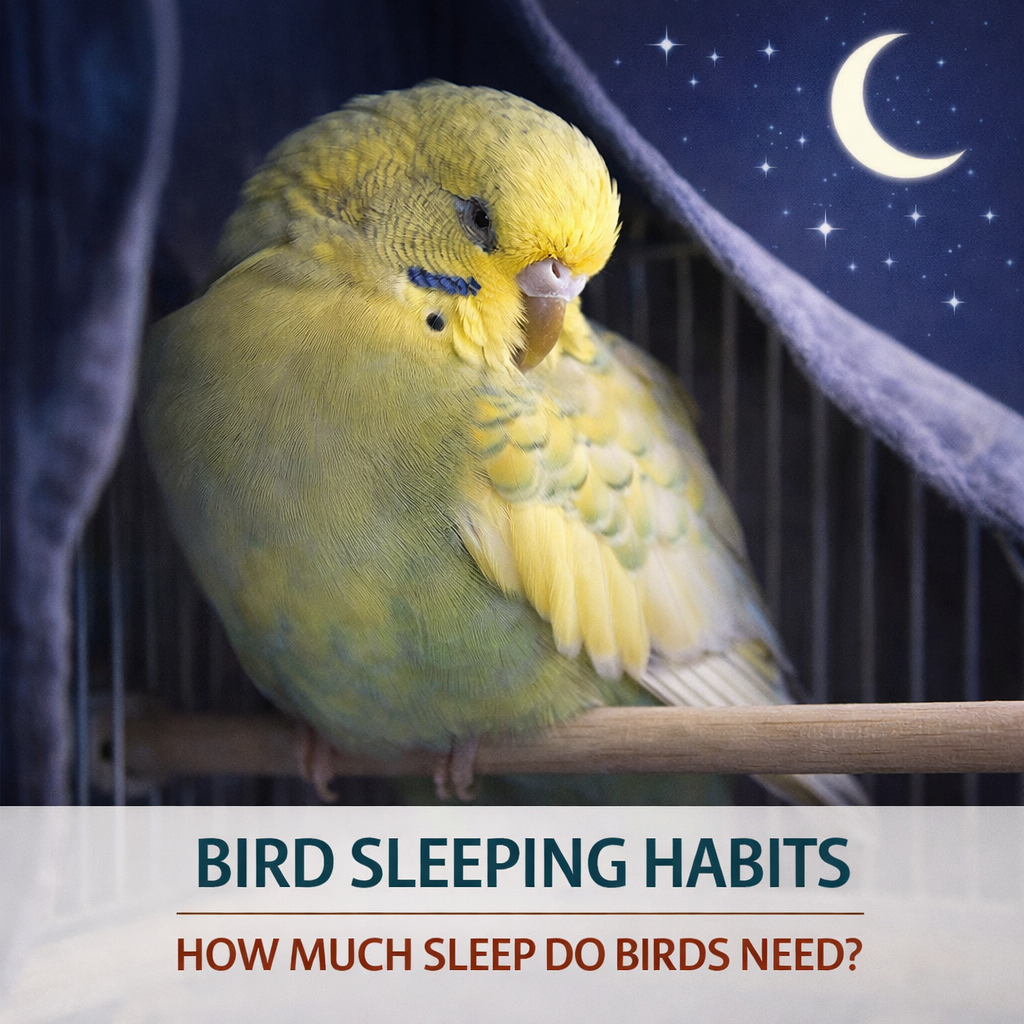
Sleep is essential for your bird’s health, mood, and overall well-being. Many bird owners underestimate the importance of proper sleep, but just like humans, birds need consistent and quality rest to stay healthy.
Understanding your bird’s sleeping habits will help you create a better environment and prevent stress or behavioral problems.
🐾 Why Sleep Is Important for Birds
Sleep plays a major role in your bird’s life.
Key Benefits:
- Supports immune system
- Improves mood and behavior
- Boosts energy levels
- Helps with learning and memory
A well-rested bird is more active and happier.
⏰ How Much Sleep Do Birds Need?
Most pet birds need:
Average Sleep Time:
- 10 to 12 hours per night
Some species may need even more.
🌙 Natural Sleep Patterns
Birds follow natural light cycles.
In the Wild:
- Sleep at sunset
- Wake at sunrise
Your bird’s routine should match this pattern as much as possible.
🐦 Signs of a Well-Rested Bird
A healthy, well-rested bird will:
- Be active and alert
- Chirp and interact
- Eat normally
Good sleep leads to good behavior.
⚠️ Signs of Sleep Problems
Lack of sleep can cause serious issues.
Warning Signs:
- Irritability
- Excessive screaming
- Aggression
- Feather plucking
Sleep deprivation affects both mental and physical health.
🏡 Creating the Perfect Sleep Environment
Your bird needs a calm and safe place to sleep.
Tips:
- Keep the cage in a quiet area
- Reduce noise at night
- Dim the lights
A peaceful environment improves sleep quality.
🌑 Using Cage Covers
Many bird owners use cage covers.
Benefits:
- Blocks light
- Reduces distractions
- Helps create a bedtime routine
Make sure there is proper ventilation.
🔊 Avoid Noise at Night
Birds are sensitive to sound.
Avoid:
- Loud TV
- Music
- Sudden noises
Quiet surroundings help your bird relax.
🌡️ Temperature and Comfort
Birds need a comfortable environment.
Ideal Conditions:
- Stable room temperature
- No drafts
Comfort supports better sleep.
🐾 Consistent Sleep Schedule
Routine is very important.
Tips:
- Put your bird to sleep at the same time
- Wake up at the same time daily
Consistency reduces stress.
🧠 Sleep and Behavior
Sleep affects behavior directly.
Lack of Sleep Can Cause:
- Aggression
- Anxiety
- Poor training response
A rested bird is easier to train and handle.
🐦 Do Birds Nap During the Day?
Yes, birds may take short naps.
Normal Behavior:
- Brief rest periods during the day
But nighttime sleep is still essential.
⚠️ Common Sleep Mistakes
Avoid these mistakes:
- Keeping lights on at night
- Loud environment
- Irregular schedule
These disrupt your bird’s sleep.
🧩 Different Birds, Different Needs
Sleep needs vary slightly by species.
Small Birds:
- Need consistent routine
Large Parrots:
- May need more quiet time
Observe your bird’s behavior.
❤️ Helping Your Bird Sleep Better
Tips:
- Create a bedtime routine
- Use soft lighting
- Keep environment calm
Simple changes make a big difference.
🔮 Long-Term Sleep Health
Good sleep habits lead to:
- Better mood
- Stronger immune system
- Longer lifespan
Consistency is key.
📌 Conclusion
Sleep is a crucial part of your bird’s health and happiness. By providing a quiet environment, maintaining a consistent routine, and understanding your bird’s natural sleep patterns, you can ensure your pet gets the rest it needs.
A well-rested bird is a calm, happy, and healthy companion.
