
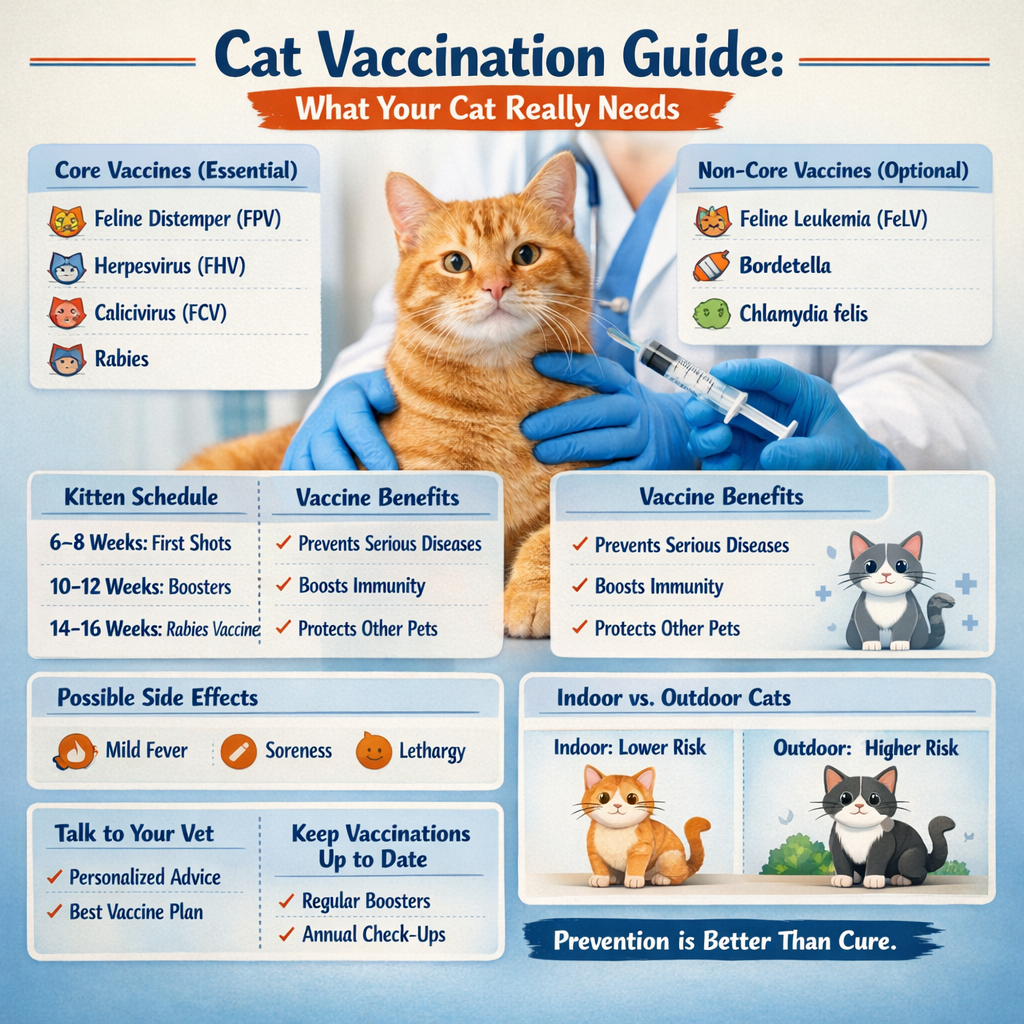
Vaccinating your cat is one of the most important steps you can take to protect its health and ensure a long, happy life. Vaccines help prevent serious and sometimes fatal diseases, many of which are highly contagious and difficult to treat. Whether you are a new cat owner or have years of experience, understanding what vaccines your cat really needs is essential for responsible pet care.
In this comprehensive guide, we will explore the importance of vaccinations, the types of vaccines available, recommended schedules, and how to make the best decisions for your cat’s health.
💉 Why Vaccinations Are Important
Vaccinations play a critical role in preventing infectious diseases. Cats, especially kittens, have immature immune systems and are more vulnerable to infections.
Key Benefits of Vaccination:
- Protects against life-threatening diseases
- Reduces the spread of infections
- Saves on costly treatments
- Improves lifespan and quality of life
Even indoor cats need vaccinations because some viruses can enter the home through shoes, clothing, or other pets.
🦠 How Vaccines Work
Vaccines work by stimulating your cat’s immune system to recognize and fight specific diseases. They contain weakened or inactive forms of viruses or bacteria.
When your cat is vaccinated:
- The immune system learns to identify the disease
- Antibodies are produced
- Future infections can be fought more effectively
This process prepares your cat’s body to respond quickly if exposed to real infections.
🐾 Core vs. Non-Core Vaccines
Not all vaccines are the same. They are divided into two main categories:
🛡️ Core Vaccines (Essential)
These vaccines are recommended for all cats, regardless of lifestyle.
1. Feline Panleukopenia (FPV)
- Also known as feline distemper
- Highly contagious and often fatal
- Affects the digestive system and immune system
2. Feline Herpesvirus (FHV-1)
- Causes respiratory infections
- Symptoms include sneezing and eye discharge
3. Feline Calicivirus (FCV)
- Another respiratory disease
- Can cause mouth ulcers and fever
4. Rabies
- Fatal disease that affects the nervous system
- Required by law in many countries
⚠️ Non-Core Vaccines (Optional)
These depend on your cat’s lifestyle and risk factors.
1. Feline Leukemia Virus (FeLV)
- Spread through close contact
- Common in outdoor cats
2. Bordetella
- Causes respiratory infections
- More common in multi-cat environments
3. Chlamydia felis
- Affects the eyes and respiratory system
Your veterinarian will recommend these based on your cat’s needs.
📅 Vaccination Schedule for Cats
Following the correct vaccination schedule is crucial for effective protection.
🐱 Kittens:
- 6–8 weeks: First vaccines (FVRCP)
- 10–12 weeks: Booster shots
- 14–16 weeks: Final kitten vaccines + Rabies
🐾 Adult Cats:
- Booster shots every 1–3 years
- Depends on vaccine type and risk level
Regular boosters are necessary to maintain immunity.
🏥 Indoor vs Outdoor Cats: Do Needs Differ?
Yes, your cat’s lifestyle plays a big role in vaccination needs.
Indoor Cats:
- Lower exposure risk
- Still need core vaccines
Outdoor Cats:
- Higher exposure to diseases
- May need additional vaccines like FeLV
Even indoor cats are not completely risk-free.
⚠️ Common Side Effects of Vaccines
Most vaccines are safe, but mild side effects can occur.
Normal Reactions:
- Slight fever
- Reduced appetite
- Mild swelling at injection site
- Temporary lethargy
Rare but Serious Reactions:
- Difficulty breathing
- Severe swelling
- Vomiting
If serious symptoms appear, contact your vet immediately.
🧠 Debunking Common Vaccine Myths
There are many misconceptions about cat vaccinations.
Myth 1: Indoor cats don’t need vaccines
❌ False — they can still be exposed to viruses
Myth 2: Vaccines are dangerous
❌ False — they are generally very safe
Myth 3: One vaccine lasts forever
❌ False — boosters are necessary
Understanding the facts helps you make better decisions.
🐾 Preparing Your Cat for Vaccination
A little preparation can make the process easier for both you and your cat.
Tips:
- Keep your cat calm before the visit
- Use a comfortable carrier
- Bring medical records
- Avoid feeding right before travel (if your cat gets stressed)
A stress-free visit improves the experience.
🏡 Aftercare: What to Do Post-Vaccination
After your cat receives a vaccine, proper care is important.
Aftercare Tips:
- Let your cat rest
- Monitor for side effects
- Provide fresh water
- Avoid intense activity for 24 hours
Most cats recover quickly and return to normal within a day.
⚖️ How Often Should Cats Be Vaccinated?
Vaccination frequency depends on several factors:
- Age
- Health condition
- Lifestyle
- Vaccine type
General Guidelines:
- Core vaccines: every 1–3 years
- Rabies: based on local laws
- Non-core: based on risk
Always follow your veterinarian’s advice.
🧬 Special Considerations
Some cats may need special vaccination plans.
Senior Cats:
- May require fewer vaccines
- Focus on overall health
Cats with Medical Conditions:
- Vaccination schedule may be adjusted
Pregnant Cats:
- Avoid unnecessary vaccines
Always consult your vet for personalized care.
💰 Cost of Cat Vaccinations
The cost of vaccinations varies depending on location and clinic.
Factors Affecting Cost:
- Type of vaccine
- Number of doses
- Veterinary clinic
Although vaccines cost money, they are far cheaper than treating serious diseases.
👥 The Role of Veterinarians
Your veterinarian is your best resource for vaccination guidance.
They Help With:
- Creating a vaccination plan
- Monitoring health
- Detecting early signs of disease
Regular vet visits are essential for preventive care.
🌍 Importance of Community Immunity
Vaccinating your cat also protects other animals.
Benefits:
- Reduces disease outbreaks
- Protects vulnerable animals
- Promotes overall pet health
This concept is similar to herd immunity in humans.
🔮 Future of Cat Vaccination
Advancements in veterinary medicine are improving vaccines.
Future Trends:
- Longer-lasting vaccines
- Fewer side effects
- Personalized vaccination schedules
These innovations will make pet care even more effective.
📌 Conclusion
Vaccination is one of the most effective ways to protect your cat from serious diseases. By understanding the types of vaccines, following the correct schedule, and working closely with your veterinarian, you can ensure your cat stays healthy throughout its life.
Every cat is different, so there is no one-size-fits-all approach. The key is to make informed decisions based on your cat’s lifestyle, age, and health condition.
Remember, prevention is always better than cure. Vaccinating your cat today means giving it a safer and healthier tomorrow.
A protected cat is a happy cat—and a healthy cat is a lifelong companion. 🐾💙
