
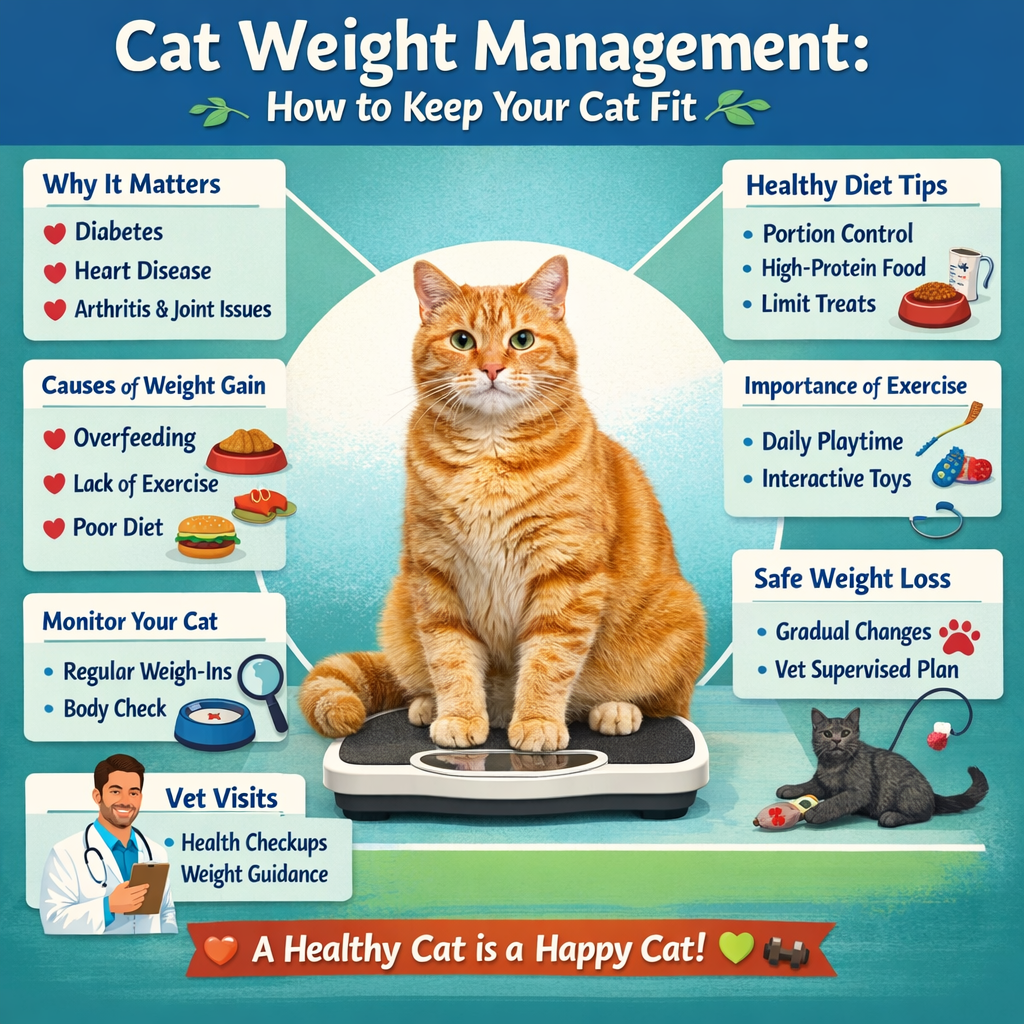
🐱 Cat Weight Management:
Maintaining a healthy weight is one of the most important responsibilities of a cat owner. Just like humans, cats can suffer from weight-related health issues that affect their overall well-being and lifespan. In recent years, obesity in cats has become increasingly common, especially among indoor cats with limited physical activity.
Weight management is not just about keeping your cat looking good—it plays a vital role in ensuring a long, active, and healthy life. By understanding the causes of weight gain and adopting healthy habits, you can help your cat stay fit and energetic.
⚖️ Why Weight Management Is Important
Keeping your cat at a healthy weight significa
Common Risks of Overweight Cats
- Diabetes
- Arthritis and joint
- Heart disease
- Reduced mobility
- Shortened lifespan
On the other hand, underweight cats may suffer from poor immunity, ضعف التغذية (malnutrition), and ضعف عام.
Maintaining balance is the key to optimal health.
🐾 What Is a Healthy Weight for a Cat?
A healthy weight varies depending on your cat’s breed, age, and size, but there are general signs you can look for.
Signs of a Healthy Cat:
- You can feel the ribs easily without pressing hard
- A visible waist when viewed from above
- A slightly tucked abdomen
Signs of Overweight:
- No visible waist
- Difficulty moving or jumping
- Excess fat around the belly
If you are unsure, a veterinarian can help determine your cat’s ideal weight.
🍖 Causes of Weight Gain in Cats
Understanding the reasons behind weight gain is the first step toward prevention.
Common Causes:
- Overfeeding
Feeding too much food or giving excessive treats can quickly lead to obesity. - Lack of Exercise
Indoor cats often do not get enough physical activity. - Low-Quality Diet
Foods high in carbohydrates and unhealthy fats contribute to weight gain. - Age
Older cats tend to be less active and burn fewer calories. - Medical Conditions
Certain health issues can affect metabolism and lead to weight gain.
🥗 Proper Nutrition for Weight Control
A balanced diet is essential for maintaining your cat’s weight.
Healthy Feeding Tips:
- Choose high-quality cat food
- Follow recommended portion sizes
- Avoid free feeding (leaving food available all day)
- Limit treats
Essential Nutrients:
- Protein for muscle development
- Healthy fats for energy
- Vitamins and minerals for overall health
Wet food can be helpful, as it contains more moisture and fewer calories per serving.
🍽️ Portion Control Matters
Overfeeding is one of the most common mistakes cat owners make.
How to Manage Portions:
- Use a measuring cup
- Follow feeding guidelines on food packaging
- Adjust portions based on activity level
Scheduled feeding is more effective than leaving food out all day.
💪 The Role of Exercise
Exercise is essential for keeping your cat fit and preventing obesity.
Benefits of Exercise:
- Burns calories
- Improves mood
- Strengthens muscles
Fun Ways to Keep Your Cat Active:
- Interactive toys
- Laser pointers
- Climbing trees
- Chase and hunting games
Even 15–20 minutes of daily play can significantly improve your cat’s health.
🧠 Mental Stimulation and Activity
Mental stimulation is just as important as physical exercise.
Ways to Stimulate Your Cat:
- Puzzle feeders
- Rotating toys
- Window perches
Bored cats are more likely to overeat, so keeping them mentally engaged helps control weight.
🐱 Indoor Cats and Weight Gain
Indoor cats are more prone to gaining weight due to limited movement.
How to Help Indoor Cats Stay Fit:
- Create daily play routines
- Provide climbing structures
- Encourage movement through toys
Transforming your home into an active environment can make a big difference.
⚠️ Dangers of Rapid Weight Loss
If your cat is overweight, weight loss should be gradual and controlled.
Avoid:
- Starving your cat
- Sudden drastic food reduction
Rapid weight loss can lead to serious liver disease.
Safe Weight Loss Tips:
- Reduce calories gradually
- Follow a vet-approved diet plan
- Maintain a consistent feeding schedule
🏥 When to Visit the Veterinarian
Regular veterinary care is essential for proper weight management.
Visit the Vet If:
- Your cat is gaining weight quickly
- There is sudden weight loss
- Your cat becomes inactive
A veterinarian can identify underlying issues and recommend a personalized plan.
💧 Hydration and Weight Control
Water plays an important role in maintaining your cat’s health.
Benefits of Hydration:
- Supports metabolism
- Aids digestion
- Helps control appetite
Tips:
- Provide fresh water daily
- Use water fountains to encourage drinking
🦷 Dental Health and Eating Habits
Dental issues can affect how your cat eats and impact its weight.
Signs of Dental Problems:
- Difficulty chewing
- Loss of appetite
Maintaining good oral hygiene ensures proper eating habits.
⚖️ Monitoring Your Cat’s Progress
Tracking your cat’s weight helps you stay on the right path.
How to Monitor:
- Weigh your cat regularly
- Observe body shape changes
- Adjust diet and activity when needed
Consistency is key to long-term success.
👥 Building Healthy Daily Habits
Daily routines play a major role in maintaining a healthy weight.
Healthy Habits:
- Fixed feeding times
- Daily exercise
- Clean feeding areas
Small, consistent habits lead to lasting results.
🧩 Common Mistakes to Avoid
Avoid these common mistakes:
- Overfeeding treats
- Ignoring weight changes
- Lack of exercise
- Feeding human food
These habits can quickly lead to obesity.
❤️ Tips for Long-Term Success
Maintaining your cat’s weight requires dedication and consistency.
Best Practices:
- Stick to a routine
- Stay consistent
- Monitor progress regularly
- Consult your vet when needed
🔮 The Future of Pet Health
Pet care is evolving with modern technology.
Emerging Trends:
- Smart feeding systems
- Pet activity trackers
- Customized nutrition plans
These innovations make it easier to manage your cat’s health.
📌 Conclusion
Managing your cat’s weight is one of the most important steps toward ensuring a long, healthy, and happy life. By providing proper nutrition, encouraging regular exercise, and maintaining consistent habits, you can prevent obesity and related health issues.
Remember, weight management is not about perfection—it’s about making better choices every day. Small changes can lead to significant improvements over time.
A healthy cat is a happy cat—and a fit cat is a thriving companion. 🐾💙
