
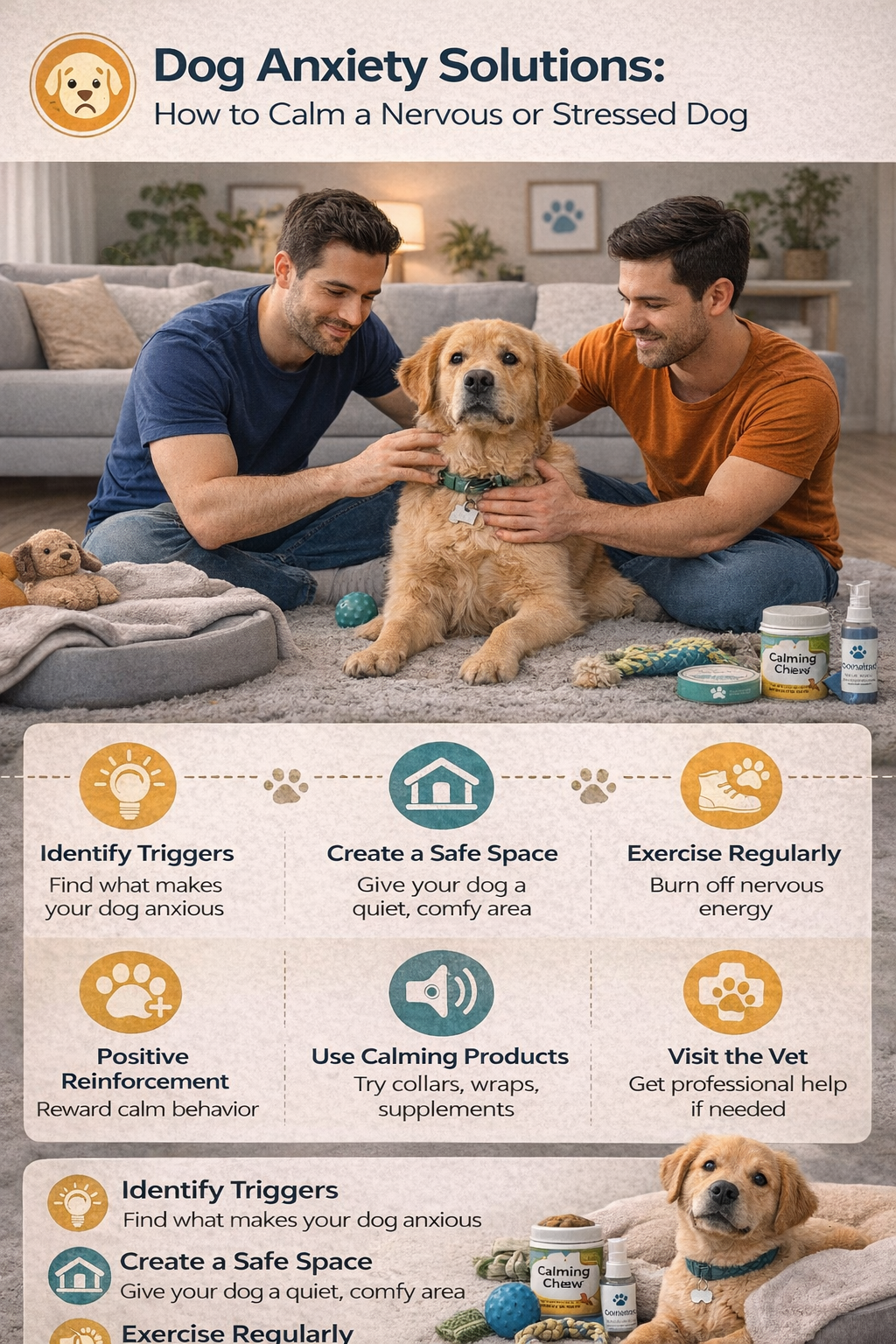
Dog anxiety is a common issue that many pet owners face. Just like humans, dogs can experience stress, fear, and nervousness due to different situations such as separation, loud noises, or unfamiliar environments.
Understanding the causes of anxiety and learning how to manage it can help your dog feel safe, relaxed, and happy.
🐾 What Is Dog Anxiety?
Dog anxiety is a condition where a dog feels excessive fear or stress.
Common Types:
Separation anxiety
Noise anxiety (thunder, fireworks)
Social anxiety
Each type requires a different approach.
⚠️ Signs of Anxiety in Dogs
Recognizing anxiety early is important.
Common Signs:
Excessive barking
Destructive behavior
Pacing
Trembling
Hiding
These behaviors indicate stress.
🧠 Causes of Dog Anxiety
Understanding the cause helps in treatment.
Common Causes:
Being left alone
Loud noises
Changes in environment
Past trauma
Identifying triggers is the first step.
🐶 Separation Anxiety
One of the most common issues.
Signs:
Barking when alone
Chewing furniture
Trying to escape
Solutions:
Gradual training
Leaving toys
Creating a safe space
🔊 Noise Anxiety
Some dogs fear loud sounds.
Triggers:
Thunderstorms
Fireworks
Loud traffic
Solutions:
Calm environment
White noise
Comfort items
🏡 Creating a Safe Space
Dogs need a place where they feel secure.
Tips:
Quiet area
Comfortable bed
Favorite toys
A safe space reduces stress.
🧩 Mental Stimulation
Keeping your dog busy helps reduce anxiety.
Ideas:
Puzzle toys
Training exercises
Interactive games
Mental activity reduces stress.
🚶 Exercise and Anxiety
Exercise helps release stress.
Benefits:
Burns excess energy
Improves mood
Reduces destructive behavior
A tired dog is a calm dog.
🎯 Positive Reinforcement
Reward calm behavior.
How:
Give treats when your dog is relaxed
Praise calm actions
Avoid punishing anxious behavior.
⚠️ What NOT to Do
Avoid these mistakes:
Punishing your dog
Ignoring anxiety signs
Forcing your dog into scary situations
These can make anxiety worse.
🐕 Gradual Desensitization
Help your dog get used to triggers slowly.
Example:
Play low-volume sounds
Gradually increase intensity
This builds tolerance.
🏥 When to See a Vet
Professional help may be needed.
Visit a vet if:
Anxiety is severe
Behavior becomes dangerous
No improvement with training
Medication or therapy may help.
💊 Calming Products
Some products can help reduce anxiety.
Examples:
Calming collars
Anxiety wraps
Natural supplements
Always consult a vet first.
❤️ Building Trust and Comfort
Your presence matters.
Tips:
Stay calm
Spend quality time
Create routine
Trust reduces fear.
🔮 Long-Term Anxiety Management
Consistency is key.
Focus On:
Routine
Training
Positive experiences
Over time, anxiety can be reduced.
📌 Conclusion
Dog anxiety can be challenging, but with the right approach, patience, and care, you can help your dog feel safe and relaxed. Understanding the causes and using effective solutions will improve your dog’s quality of life.
A calm dog is a happy dog—and a happy dog makes a happy home.
