
Training your puppy requires consistency, patience, and a well-structured routine. Puppies learn best when they follow a daily schedule that includes training, feeding, playtime, and rest.
Creating a proper training schedule helps your puppy develop good habits quickly and reduces behavioral problems in the future.
🐾 Why a Training Schedule Is Important
Puppies thrive on routine.
Key Benefits:
- Faster learning
- Better behavior
- Reduced anxiety
- Easier house training
A structured day makes training more effective.
⏰ Ideal Daily Puppy Schedule
A balanced routine includes all essential activities.
Basic Structure:
- Morning routine
- Feeding times
- Training sessions
- Playtime
- Rest and sleep
Consistency is key.
🌅 Morning Routine
Start the day with structure.
Steps:
- Take your puppy outside (potty)
- Short walk or play
- First meal
This sets a positive tone for the day.
🍖 Feeding Schedule
Puppies need regular meals.
Recommended:
- 3 meals per day (morning, afternoon, evening)
Tip:
Feed at the same time daily.
🎯 Training Sessions
Keep training short and fun.
Best Practice:
- 5–10 minutes per session
- 2–3 sessions daily
Focus on basic commands like:
- Sit
- Stay
- Come
🐕 Playtime and Exercise
Puppies have lots of energy.
Activities:
- Fetch
- Tug-of-war
- Interactive toys
Exercise helps reduce bad behavior.
💤 Nap and Rest Time
Puppies need a lot of sleep.
Important:
- 18–20 hours of sleep daily
Rest is essential for growth and learning.
🚽 Potty Training Schedule
Consistency is crucial.
Take your puppy out:
- After waking up
- After meals
- After playtime
- Before bedtime
This helps avoid accidents.
🌇 Evening Routine
End the day calmly.
Steps:
- Light playtime
- Final potty break
- Quiet time
Helps your puppy relax.
🧠 Mental Stimulation
Keep your puppy’s brain active.
Ideas:
- Puzzle toys
- Training games
- Learning new tricks
Mental exercise is just as important.
⚠️ Common Mistakes
Avoid these mistakes:
- Skipping routine
- Long training sessions
- Inconsistency
- Lack of patience
These slow down progress.
🐾 Adjusting the Schedule
Every puppy is different.
Adjust based on:
- Age
- Energy level
- Breed
Flexibility is important.
❤️ Building Good Habits
Consistency builds habits.
Tips:
- Reward good behavior
- Stay calm
- Repeat daily
Habits form over time.
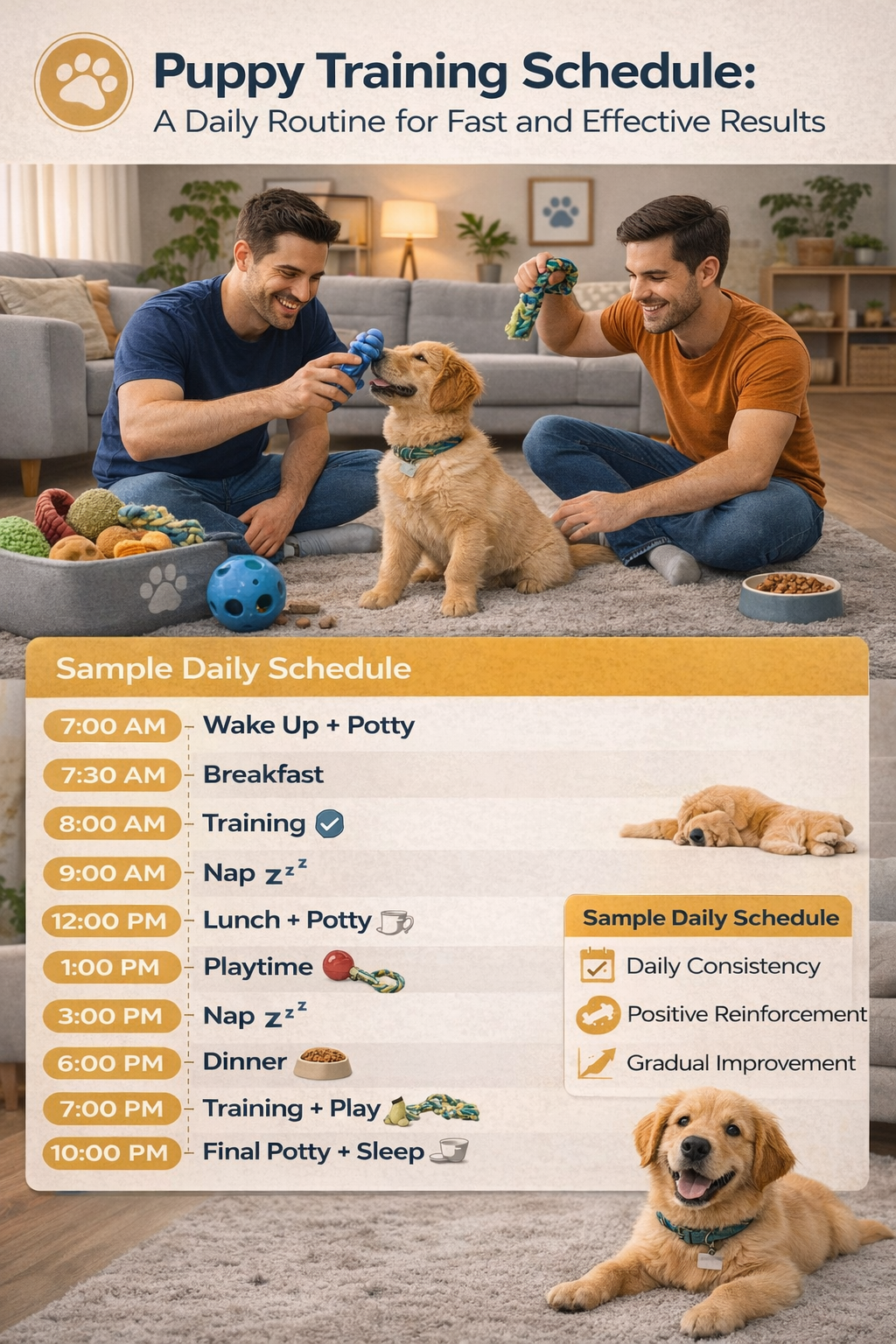
🏡 Sample Daily Schedule
Example:
- 7:00 AM → Wake up + potty
- 7:30 AM → Breakfast
- 8:00 AM → Training
- 9:00 AM → Nap
- 12:00 PM → Lunch + potty
- 1:00 PM → Playtime
- 3:00 PM → Nap
- 6:00 PM → Dinner
- 7:00 PM → Training + play
- 10:00 PM → Final potty + sleep
🔮 Long-Term Training Success
Routine leads to success.
Focus On:
- Daily consistency
- Positive reinforcement
- Gradual improvement
Training becomes easier over time.
📌 Conclusion
A well-planned puppy training schedule is the key to raising a well-behaved and happy dog. By maintaining a consistent routine and combining training with play and rest, you can help your puppy learn quickly and develop good habits.
Start early, stay consistent, and enjoy the journey with your puppy.
