
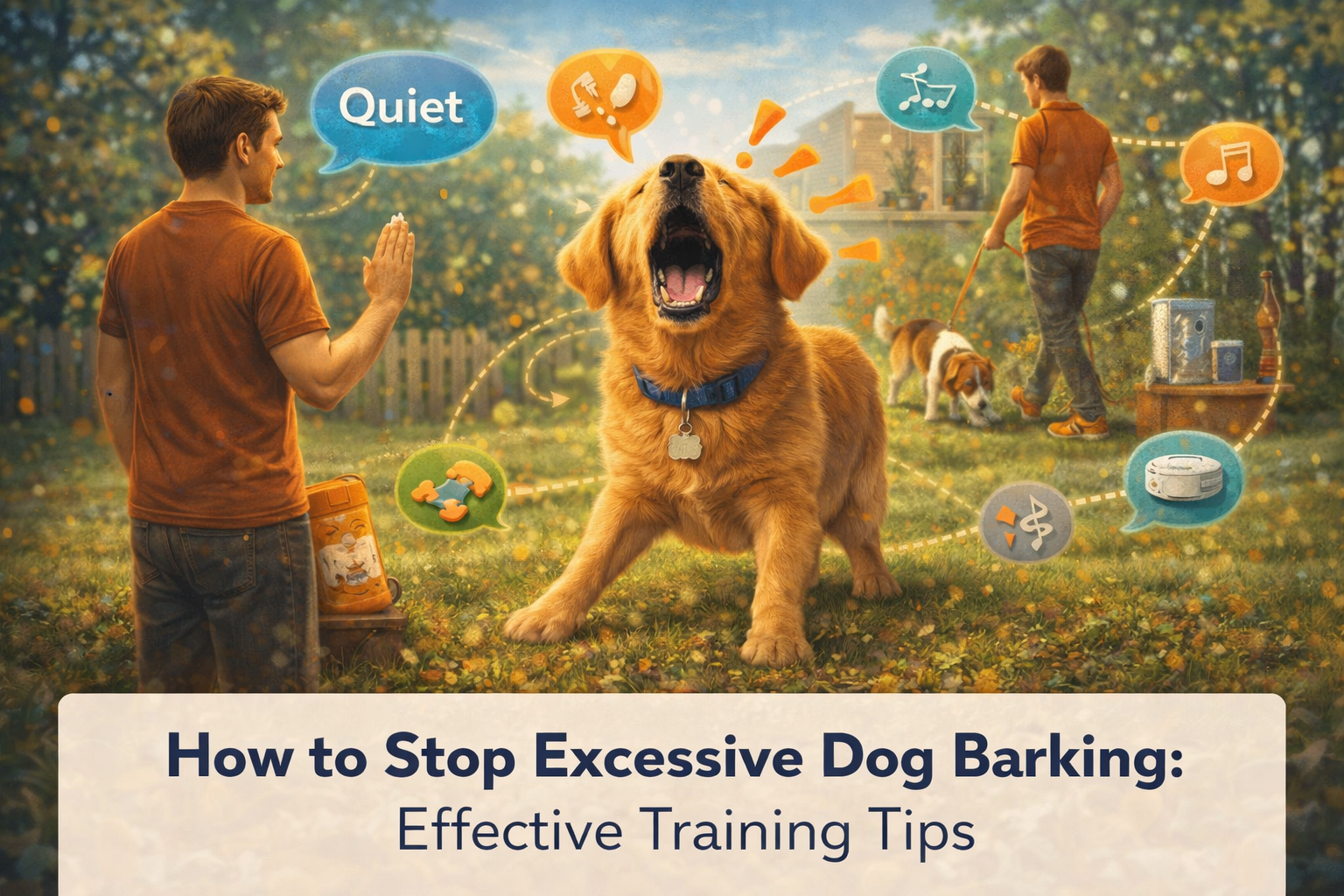
Barking is a natural way for dogs to communicate, but excessive barking can quickly become a problem for both owners and neighbors. Whether your dog barks out of boredom, fear, or excitement, understanding the reason behind the behavior is the key to solving it.
With the right training techniques and consistency, you can reduce excessive barking and create a calmer environment at home.
🐾 Why Do Dogs Bark?
Dogs bark for different reasons.
Common Causes:
- Attention seeking
- Boredom
- Fear or anxiety
- Territorial behavior
- Excitement
Identifying the cause helps you choose the right solution.
🔊 Types of Barking
Not all barking is the same.
1. Alert Barking
When a dog notices something unusual.
2. Attention Barking
When your dog wants food, play, or attention.
3. Boredom Barking
Occurs when a dog lacks stimulation.
4. Anxiety Barking
Caused by fear or separation anxiety.
🎯 Step 1: Identify the Trigger
Observe when your dog barks.
Ask Yourself:
- What is happening when barking starts?
- Is your dog alone or with you?
- Is there a specific sound or person?
Understanding triggers is essential.
🧠 Step 2: Use Positive Reinforcement
Reward quiet behavior instead of punishing barking.
How:
- Wait for silence
- Give treats and praise
- Repeat consistently
Dogs learn faster with rewards.
🛑 Step 3: Teach the “Quiet” Command
Training your dog to stop barking on command is very effective.
Steps:
- Let your dog bark
- Say “Quiet” calmly
- Reward when they stop
Practice regularly.
🐕 Step 4: Provide Enough Exercise
A tired dog is a quiet dog.
Activities:
- Daily walks
- Playtime
- Training sessions
Exercise reduces boredom-related barking.
🧩 Step 5: Mental Stimulation
Mental activity is just as important.
Ideas:
- Puzzle toys
- Training games
- Interactive toys
This keeps your dog busy and calm.
🚪 Step 6: Manage the Environment
Reduce exposure to barking triggers.
Examples:
- Close curtains
- Limit access to windows
- Use calming sounds
A controlled environment helps.
⚠️ Avoid Common Mistakes
Some actions make barking worse.
Don’t:
- Yell at your dog
- Punish barking harshly
- Reward barking unintentionally
Dogs may misunderstand your reaction.
🐾 Handling Attention-Seeking Barking
Ignore unwanted barking.
Tip:
Only give attention when your dog is calm.
This teaches them the right behavior.
😟 Dealing with Anxiety Barking
Anxiety requires a different approach.
Solutions:
- Gradual alone-time training
- Comfort toys
- Calm environment
In severe cases, consult a vet.
🏡 Training Consistency
Consistency is key.
Important:
- Everyone in the household should follow the same rules
Mixed signals confuse your dog.
🐶 When Barking Is Normal
Not all barking is bad.
Acceptable Situations:
- Warning of danger
- Communication
- Playfulness
The goal is control, not silence.
👨⚕️ When to Seek Help
If barking becomes uncontrollable:
- Consult a professional trainer
- Visit a veterinarian
Some issues require expert help.
🔮 Long-Term Results
Training takes time.
Expect:
- Gradual improvement
- Better communication
- Calmer behavior
Stay patient and consistent.
📌 Conclusion
Excessive barking can be frustrating, but it’s a problem that can be solved with the right approach. By understanding your dog’s needs, using positive training methods, and staying consistent, you can reduce barking and improve your dog’s behavior.
A calm dog leads to a peaceful and happy home.
